

Ophthalmology marketing strategies: attracting high-value patients in 2026

Share:

Copy link

Share via Telegram

Share on Facebook

Share on LinkedIn

Share via WhatsApp

Share on X

Share via Email

Table of contents
Not long ago, ophthalmology marketing was pretty straightforward. A decent website, a few Google Ads, maybe a billboard or two, and patients showed up. But in 2026, that’s changed.
Today’s patients don’t just Google “an eye doctor.” They ask AI assistants for recommendations, compare reviews across platforms, watch short videos explaining procedures, and expect your website to answer their questions before they pick up the phone.
Put simply, marketing shapes the patient experience before the first appointment.
That’s why ophthalmology marketing now sits at the intersection of technology, trust, and education. In this guide, we’ll walk through the ophthalmology marketing strategies that work in 2026, so you can build a system that converts interest into long-term growth.
Key takeaways
1.
Digital-first ophthalmology marketing lowers patient acquisition costs while improving long-term ROI.
2.
Local SEO, Google reviews, and reputation management drive the highest-intent patient traffic.
3.
3D medical animations help patients understand complex procedures like LASIK and cataract surgery, increasing consultation conversions.
4.
The most effective ophthalmology marketing strategies educate patients instead of relying on aggressive promotion.
5.
Strong referral networks with optometrists remain one of the most reliable sources of high-value patients.
Why is strategic ophthalmology marketing important?
The answer is quite simple: it helps the right patients find you and confidently choose your clinic. And if you want the bigger picture, here are a few more reasons why it matters:
Shift from traditional to digital-first
The way patients choose an ophthalmologist has changed. A referral or a local ad may start the conversation, but the decision usually happens online.
Patients compare clinics, read reviews, watch procedure videos, and look for answers before they ever contact your team. That means your website, search visibility, and digital content become part of the patient experience long before the first appointment.
A strong ophthalmology digital marketing strategy makes sure your clinic appears at the right moment and gives patients enough confidence to move forward.
Reducing patient acquisition costs (PAC)
Marketing without a strategy often means spending more money to chase more leads. The problem? Not every click turns into a consultation.
Strategic ophthalmology marketing focuses on attracting and educating high-intent patients before they contact your clinic. When someone already understands what LASIK, cataract surgery, or another procedure involves, the consultation starts from a place of trust instead of uncertainty.
Over time, better education, stronger SEO, and optimized patient journeys reduce acquisition costs and improve marketing ROI.
Building a brand that attracts high-value patients
Not every patient is looking for the same, and that’s okay. Some are searching for the lowest price, while others are looking for expertise and advanced technology.
Strong ophthalmology practice marketing helps you communicate what makes your clinic different.
Through educational content, patient stories, and visual explanations of procedures, you can attract patients who trust your approach to care.
Essential digital channels for ophthalmology practices

Ophthalmology marketing is most effective when all your digital channels work in tandem, creating a connected experience that moves patients from interest to appointment.
High-performance website & UX
Your website is the calling card of your ophthalmology web marketing. It should load fast, look modern, and make it obvious what a patient should do next. All of which falls under a great UX experience that helps to remove friction for the customer at every touchpoint.
Here’s the list of key features every ophthalmology website should include:
-
Fast page speed to reduce bounce rates and improve SEO
-
Mobile-first design, since most patients browse on their phones
-
Clear calls to action (CTA) like "Book an exam", "Request a consultation", "Call now"
-
Simple online scheduling or consultation request forms
-
Dedicated service pages for LASIK, cataract surgery, and other high-demand treatments
-
Trust signals, such as doctor credentials, reviews, and certifications
-
Educational content, including visuals and videos that explain procedures
-
Accessibility compliance (WCAG) to ensure all patients can navigate your site comfortably
And how can you measure if your website is performing? Patients move smoothly through the entire eye care patient journey, and appointment bookings increase as a result.
Video marketing
Patients rarely decide to undergo procedures like LASIK or cataract surgery based on text alone.
This is where ophthalmology 3D animations become especially powerful. Such videos clearly show what’s happening inside the eye, explain complex procedures step by step, and remove fear caused by the unknown.
Across ophthalmology marketing, 3D animations can be used for:
-
Website service pages to visually explain procedures and improve conversion rates
-
Landing pages for PPC campaigns, helping turn paid clicks into qualified leads
-
Patient education materials, sent before consultations to shorten decision time
-
In-clinic screens and waiting rooms to educate patients while they wait
-
Consultation support, helping doctors explain treatment options more clearly
-
Email campaigns, reinforcing understanding after the first visit
-
Social media and ads, breaking down complex topics into short, digestible visuals
With 3D animation as part of your ophthalmology video marketing strategy, you’re improving the entire eye care patient journey as they understand medical concepts better and hesitate less when booking an appointment.
SEO: local & organic authority
SEO remains one of the most reliable medical marketing strategies, and ophthalmology is no exception, because it connects you with patients who are actively looking for care.
Local SEO helps nearby patients find your practice when they’re ready to book. This includes optimizing your Google Business Profile, collecting patient reviews, and making sure your location, hours, and services are consistent everywhere online. When someone searches for “ophthalmologist near me” or “LASIK clinic in [city],” strong local medical SEO means your clinic appears first.
Organic SEO, on the other hand, builds long-term authority. Educational blog posts, service pages, and patient-focused content can answer common questions about eye conditions and procedures. It also supports the full ophthalmology marketing plan by attracting patients earlier in their decision-making process.
With a combination of local visibility and organic authority, your site earns trust, lowers patient acquisition costs, and consistently brings in qualified leads.
PPC advertising (Google Ads)
Let’s be honest, Google Ads are often the fastest way to get in front of patients who are actively looking for procedures.
High-performing ophthalmology ads are incredibly specific. Instead of promoting “eye care services,” they focus on individual treatments, like LASIK or cataract surgery, and speak directly to patient concerns. Clear headlines and messaging are a must to get clicks.
However, without the right landing experience, paid traffic quickly turns into wasted spend. If you send users to unspecific, generic pages, you lose clicks and actually raise patient acquisition costs.
A smarter approach focuses on intent and clarity from the very first interaction. Well-built landing pages should include educational content, visual explanations, and CTAs to turn paid clicks into leads.
Social media & reputation management
Though patients rarely book because of a social post, they often check social platforms to confirm they’re making the right choice. Reviews, before-and-after stories, and real patient experiences help validate their decision.
The key here is consistency and authenticity. You need to demonstrate that your practice is active, trustworthy, and patient-focused, and that you genuinely engage with feedback. This is how you can do that:
-
Respond to reviews, both positive and negative, in a calm and professional tone
-
Encourage happy patients to leave reviews shortly after successful visits or procedures
-
Share before-and-after results (where allowed), focusing on outcomes
-
Post short educational content, answering common patient questions about procedures
-
Show the human side of your practice, including staff, behind-the-scenes moments, or clinic updates
-
Monitor platforms like Google, Facebook, and healthcare directories regularly to catch issues early
When done well, social media can reassure hesitant patients, strengthen brand perception, and quietly improve conversion rates.
10 best ophthalmology marketing ideas (actionable list)
Now let’s get practical. These ophthalmology marketing ideas focus on real actions you can take to drive growth.
1. Modernize patient education with visuals
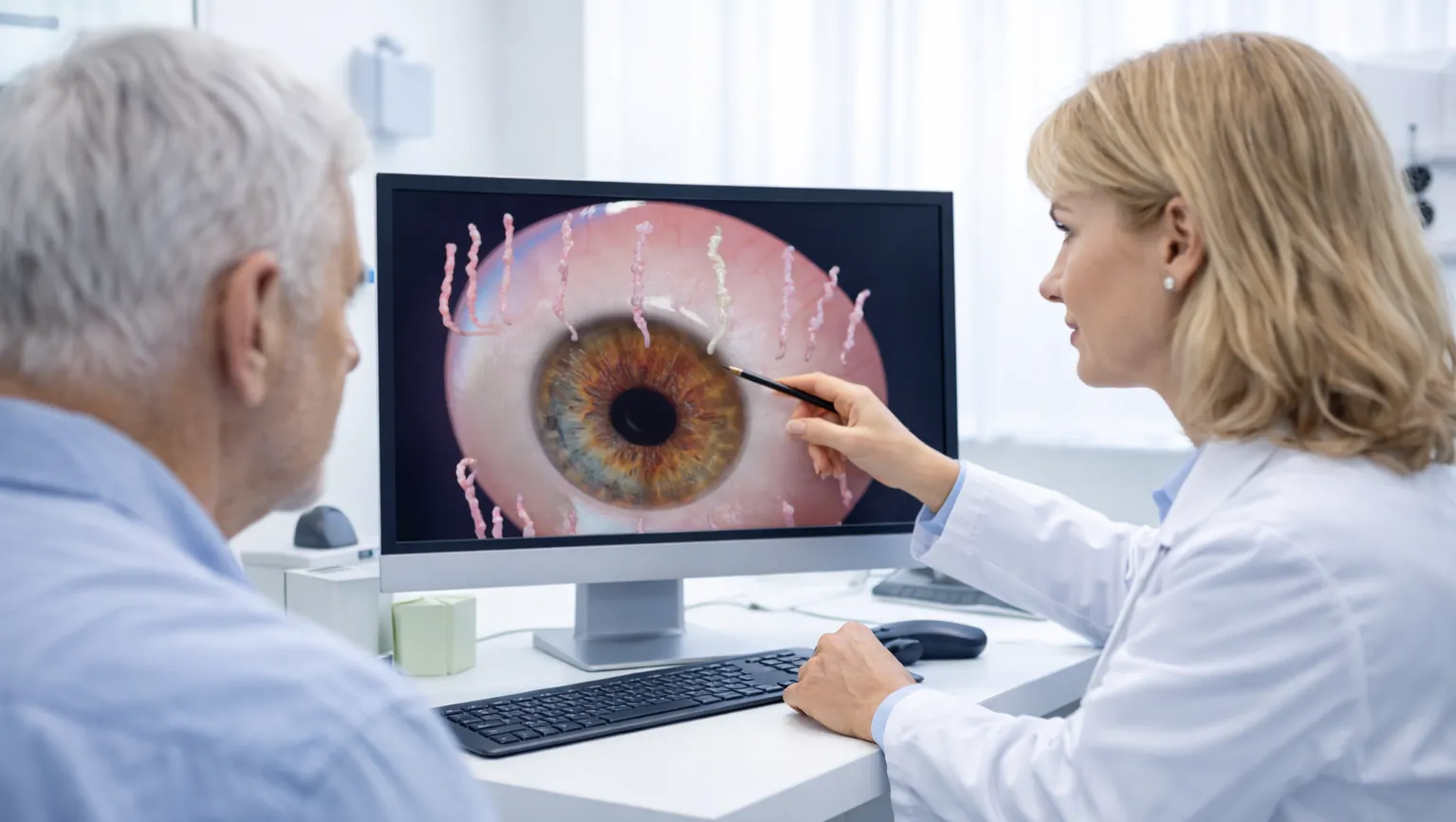
Many ophthalmology diseases and procedures are difficult to explain during a short consultation, especially when patients are anxious or unfamiliar with medical terms. Visuals, like medical animations and 3D models, help bridge that gap.
Eye clinics can implement this by using 3D animations and interactive models during consultations, on service pages, and in follow-up materials. At VOKA, we create ophthalmology-focused 3D medical animations that visually break down complex eye procedures and disease mechanisms, making them easier to understand and less intimidating.
Plus, clinics can use the VOKA 3D Anatomy & Pathology app during in-person consultations. Doctors can show patients realistic 3D eye anatomy and pathology models, helping them better grasp their condition and treatment options.
2. Leverage AI chatbots (for 24/7 booking)
An AI chatbot is a smart assistant on the website that answers common patient questions and helps book appointments, even when your front desk is offline. For ophthalmology practices, this means better patient engagement, fewer missed leads, and faster responses for high-intent visitors.
To make chatbots actually useful, keep their role focused. They work best when trained on real patient questions about services like initial screenings, LASIK, and cataract surgery. The chatbot doesn’t replace staff, but guides patients to the right next step, such as booking a consultation or leaving contact details.
Outcome: AI chatbots support ophthalmology marketing by improving response time, reducing friction in the booking process, and capturing leads that would otherwise be lost outside business hours.
3. Build OD referral networks
Optometrist doctor (OD) referral networks are partnerships with optometrists who refer patients to your clinic for care. This is a reliable way to generate qualified referrals because trust is already established before the patient reaches you.
To build a strong network, focus on making life easier for referring ODs. Keep communication simple, provide clear referral pathways, and share outcomes so they know their patients are well cared for.
Educational support helps too: procedure explainers, visual aids, and clear pre- and post-op materials make it easier for ODs to set expectations with patients.
Outcome: When done right, OD referral networks become a steady, low-volatility growth channel that supports your ophthalmology marketing plan and brings in more patients.
4. Automate reputation management
Reputation has a bigger impact on ophthalmology marketing than most practices realize. Before booking, patients almost always check reviews. At this point, inconsistent or unanswered feedback will invariably cost you appointments.
Automation helps make reputation management manageable. Eye clinics can use simple tools to automatically request reviews after appointments, monitor new feedback across platforms, and alert staff when a response is needed.
This way, reviews don’t depend on someone remembering to follow up. They happen as part of the process. The goal is to stay present and responsive. Regular review activity strengthens local SEO and reassures patients that you listen.
Outcome: Over time, automated reputation management becomes an easy way to support practice growth without adding extra workload to your team.
5. Empower patient referral programs
Happy patients are your best promoters. You just have to make referrals easy and intentional. Patient referral programs encourage existing patients to recommend your practice to friends and family, especially after positive experiences with procedures and outcomes.
To implement this, keep it simple. Clearly explain how referrals work, offer small but thoughtful incentives where appropriate, and remind patients at the right moments, like after successful visits.
Outcome: Patient referral programs support ophthalmology practice marketing by bringing in warm, high-trust leads and strengthening long-term relationships.
6. Create content hubs
A content hub is a centralized place on your website where patients can find clear, trustworthy information about eye conditions, procedures, and what to expect next.
Eye clinics can build content hubs around key services like LASIK, cataract surgery, or glaucoma care. Each hub can include short articles, FAQs, visuals, and videos that guide patients through the decision-making process.
Well-structured content hubs strengthen authority, support the full eye care patient journey, and gradually improve conversion rates over time.
Outcome: This approach supports ophthalmology digital marketing by improving SEO, reducing repetitive questions, and helping patients feel more confident before they book a consultation.
7. Promote telehealth for initial screenings
Telehealth is one of the healthcare technology trends that’s changing how patients take their first step into care. But it’s not a replacement for in-person care.
For ophthalmology practices, it works best as an entry point, giving patients a simple way to ask questions and discuss symptoms before coming into the clinic. Make telehealth visible across your website and booking flows, and make it clear that it’s meant for initial screenings or eligibility checks.
Outcome: Used thoughtfully, telehealth supports ophthalmology marketing by improving access and filtering high-intent appointments early on.
8. Nurture patients with targeted email campaigns
Email still works when it’s used thoughtfully. In the context of ophthalmology practices, email is more about guiding patients between key touchpoints: after a consultation, before a procedure, or during decision-making.
Segment your email lists based on patient interest and stage. Short educational emails, reminders, and follow-ups help patients stay informed without feeling pressured.
Outcome: Emails support ophthalmology marketing by keeping your practice top of mind and gently moving patients toward the next step.
9. Partner with local micro-influencers
You don’t need celebrities to make this work. Local micro-influencers like health bloggers, lifestyle creators, or community figures often have smaller but more trusted audiences. For eye clinics, this can mean reaching people who already live nearby and value personal recommendations.
Implementation is simple: partner with influencers who align with your values and focus on real experiences, not scripted ads. Clinic visits, procedure education, or recovery stories feel far more authentic than traditional promotions.
Outcome: These partnerships support ophthalmology practice marketing by building trust and local visibility without large ad budgets.
10. Implement interactive tools & website accessibility
Interactive tools make your website more useful. Things like vision quizzes, eligibility checkers, or symptom guides help patients engage instead of just reading passively. They also give your practice better insight into patient intent.
At the same time, accessibility matters. Making sure your site follows WCAG accessibility guidelines ensures all patients, including those with visual impairments, can navigate it comfortably.
Outcome: Together, interactivity and accessibility improve user experience, support compliance, and strengthen your ophthalmology web marketing foundation.
Building a robust ophthalmology marketing plan

A successful ophthalmology marketing strategy is not built on random campaigns. It starts with understanding your market, defining your goals, and creating a system where every channel works toward the same outcome: attracting the right patients and improving ROI.
Here is a practical roadmap to build a marketing plan for your ophthalmology practice:
A strong ophthalmology marketing plan is not about being everywhere. It is about choosing the channels that match your patients’ decision-making process and improving them over time.
Wrapping up
Ophthalmology marketing works best when you treat it as an ecosystem. Every touchpoint mentioned in this article plays a role in how patients discover your practice and decide to move forward.
What increasingly sets leading ophthalmology clinics apart is how effectively they educate patients before the consultation. High-quality 3D medical animations and interactive visual tools help patients understand complex procedures, reduce anxiety, and make confident treatment decisions.
If you're ready to elevate your practice with custom 3D medical animations, the VOKA team would be happy to help. Contact us to discuss your goals and vision.
FAQ
1. What is the most effective ophthalmology marketing strategy in 2026?
There isn’t a single tactic that works on its own. The most effective ophthalmology marketing strategy in 2026 is a connected system that combines strong digital fundamentals (website, SEO, reputation) with clear patient education. Practices that align channels around the full patient journey see more consistent, predictable growth.
2. How can I improve conversion rates for LASIK?
Conversion improves when patients clearly understand the procedure and feel confident in the outcome. Educational landing pages, visual explanations, and realistic expectations reduce hesitation. Tools like procedure-specific content, 3D animations, and streamlined booking flows help turn interest into booked consultations.
3. How much should a practice spend on marketing?
Most ophthalmology practices invest a percentage of revenue rather than a fixed amount. The exact number depends on growth goals, competition, and services offered. What matters more than spending is efficiency, allocating budget across channels that lower patient acquisition costs over time, not just short-term lead volume.
4. Why is SEO important for ophthalmologists?
SEO helps patients find your practice when they’re actively looking for care. Local SEO drives nearby appointment-ready traffic, while organic content builds long-term authority and trust. Together, they support sustainable ophthalmology digital marketing without relying entirely on paid ads.
5. How do I get more referrals from optometrists?
Strong OD referral networks are built on trust and simplicity. Clear communication, easy referral pathways, shared educational materials, and follow-up on outcomes all help strengthen partnerships. When optometrists feel supported, referrals become consistent and high-quality.
6. Is video marketing really necessary for eye clinics?
Yes, especially for complex or high-value procedures. Video marketing helps patients visualize what’s happening, reduces uncertainty, and improves understanding. Short videos and 3D animations used across websites, consultations, and follow-ups make it easier for patients to move forward with confidence.
Make VOKA your preferred source
See more VOKA articles in Google Search

Share
Table of contents

Thank you for your comment!
Your comment has been submitted for moderation and will be published soon. We'll email you once it’s live.