

Top 7 biotech & biopharma industry trends shaping 2026

Share:

Copy link

Share via Telegram

Share on Facebook

Share on LinkedIn

Share via WhatsApp

Share on X

Share via Email
Table of contents
Great science is no longer enough. In biotech, success depends on how quickly you can move from discovery to commercialization and how clearly you can explain what you've created.
The VOKA team works with pharma and biotech companies every day, and we're often involved long before a therapy reaches the market. That gives us a close view of where teams lose time trying to communicate complex science.
So, instead of another list of predictions, let's look at the biotech and biopharma industry trends that are already shaping 2026 and what they mean for companies building the next generation of therapies.
Key takeaways
1.
Cell and gene therapies are scaling fast, creating new challenges in manufacturing, logistics, and patient engagement.
2.
mRNA and RNA therapeutics are expanding beyond vaccines, making data-driven development more important than ever.
3.
AI is transforming drug discovery, clinical trials, and personalized communication with HCPs.
4.
As therapies become more complex, 3D MoA animations help investors, regulators, and healthcare professionals understand them faster.
5.
In 2026, commercial success depends not only on scientific innovation but also on how clearly you communicate it.
1. The expansion of cell & gene therapies (CGT)
For years, CGT was mostly about proving that these therapies could work. Now the bigger challenge is different: how to manufacture them at scale, deliver them to patients, and build systems that can support their growth.
The market reflects this shift. A global analysis by the Towards Healthcare agency shows that more investment is flowing into CGT.
Here is what the CGT landscape looks like in 2026:
But market growth alone doesn’t guarantee success. Companies entering this space need to solve practical problems around production, logistics, and communication.
Shift towards “just-in-time (JIT)” delivery
Traditional drugs are manufactured, stored, and shipped when needed. CGT works differently.
Many cell therapies are personalized for a single patient. This means there is no warehouse full of finished products waiting to be delivered. The entire process has to happen in sync: patient identification, cell collection, manufacturing, quality testing, and treatment delivery.
This is why the industry is moving toward just-in-time (JIT) models. The goal is to reduce delays between diagnosis and treatment.
To make this possible, companies are investing in:
-
Digital coordination systems that connect hospitals, manufacturers, and patients.
-
Faster manufacturing workflows to reduce production timelines.
-
Data-driven logistics that help track every step of the therapy journey.
For biotech companies, this shift is not only about technology. It’s about building a reliable system around a highly complex treatment.
The rise of in vivo CAR-T
CAR-T therapies are one of the best examples of how CGT is evolving.
The traditional approach requires collecting a patient's T cells, modifying them in a laboratory, expanding them, and then returning them to the patient. It works, but the process is expensive, slow, and difficult to scale.
In vivo CAR-T aims to change that. Instead of modifying cells outside the body, this approach delivers genetic instructions directly inside the patient.
For biotech companies, this could remove some of the biggest barriers in current cell therapy models: complex manufacturing, long waiting times, and limited treatment capacity.
But explaining how in vivo CAR-T works is another challenge. And this is where high-quality 3D cell animation can help. By showing the mechanism step by step, companies can make complex therapies easier to understand for investors, HCPs, and patients.
Regulatory and strategic de-risking
CGT development comes with a difficult equation: high scientific potential, but high financial risk.
To reduce uncertainty, biotech companies are looking for ways to generate clinical evidence faster and enter new markets more efficiently.
One approach is expanding development through regional partnerships and investigator-sponsored trials. For example, a UK drugmaker, AstraZeneca, will invest $15 billion in China through 2030. Their goal is to expand R&D capabilities, find alternative markets, and generate early human proof-of-concept data before pursuing larger-scale global trials.
2. Next-generation mRNA therapeutics
mRNA proved its potential with vaccines. Now the industry is pushing this technology much further.
From oncology to rare diseases, RNA-based therapies are opening new opportunities for drug developers. The mRNA therapeutics market is expected to grow into an $83 billion market by 2035, but the next challenge is making these therapies more precise, reliable, and scalable.
For biotech companies, the focus is shifting from simply creating RNA molecules to understanding how to optimize them for specific therapeutic goals.
Two major trends are shaping the future of RNA development.
RNA modalities diversification
Researchers are exploring a wider range of RNA modalities, including tRNA, rRNA, and non-coding RNA (ncRNA), each offering different ways to influence gene expression and cellular processes.
This diversification creates new opportunities for treating diseases that were previously difficult to target. However, it also makes development more complex. Each RNA type has unique structural characteristics, delivery challenges, and biological effects that need to be carefully evaluated.
Getting RNA right starts with understanding how it behaves inside cells. Even a promising molecule can fail if its behavior can't be accurately predicted.
Greater focus on data-driven RNA engineering
As RNA technologies become more advanced, traditional trial-and-error approaches are no longer enough.
Developers are turning to data-driven RNA engineering to analyze molecular structures, predict behavior, and optimize therapeutic candidates before they enter expensive development stages.
Sequence-based analytics is becoming a key part of this process. It helps researchers:
-
Validate RNA structures by analyzing how molecules fold and function.
-
Detect impurities that could trigger unwanted immune responses.
-
Understand RNA modifications that influence stability, activity, and how long a therapy remains effective.
This shift allows biotech companies to make smarter decisions earlier in development. Instead of relying only on experimental results, teams can combine biological data with predictive analysis to improve safety and scalability.
3. Omnichannel HCP engagement
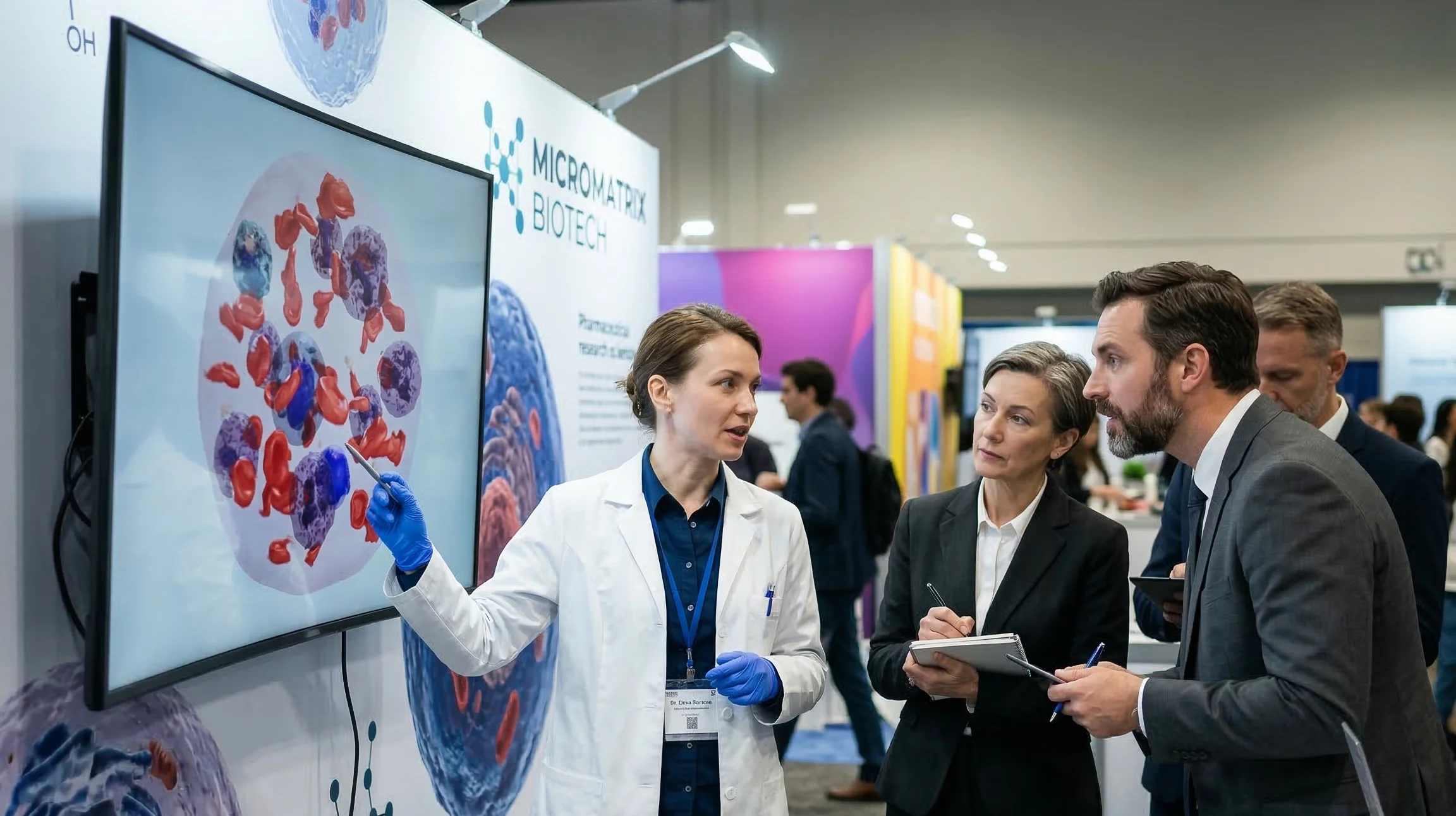
In 2026, engagement among healthcare professionals and institutions has evolved from "digital-first" to "relevance-first."
Medical information becomes more dense. So, instead of using the same materials for everyone, pharma companies are building personalized communication based on an HCP’s specialty, interests, and clinical needs.
Integration across channels
HCP engagement now happens across multiple touchpoints: conferences, digital platforms, medical portals, and virtual events.
The goal is to connect these interactions into one consistent experience. For example, a conversation with a medical science liaison can trigger a follow-up with clinical data tailored to a physician’s interests.
AI-based data-driven personalization
The priority for 2026 is launching contextually relevant communication. This implies targeted messaging where content is tailored to an HCP’s specialty, past interaction history, and real-world prescribing needs. At the same time, artificial intelligence and machine learning act as helpers and orchestrators of the process, and the modern HCP engagement presents the following highlights:
AI helps make this possible by turning large amounts of engagement data into more personalized interactions:
-
Modular content. Pre-approved videos, visuals, and text blocks can be combined into tailored materials for different HCP audiences.
-
Next-best-action. Predictive models suggest when, where, and how to continue the conversation based on previous interactions.
-
Sentiment analysis. AI analyzes feedback to help pharma teams better understand HCP challenges and improve future communication.
4. Visualizing complexity with 3D mechanism of action animation
Breakthrough therapies are getting harder to explain.
Cell and gene therapies. RNA modalities. ADCs. Radiopharmaceuticals. The science keeps getting more sophisticated, but most people who need to understand it aren't sitting in the lab.
That's why 3D mechanism of action (MoA) animation has become a business tool that helps biotech and pharma companies communicate complex science to every audience that matters.
According to Precedence Research, the medical animation market surpassed $600 million in 2026, with MoA animations accounting for nearly half of the market. That reflects a simple shift: companies no longer want to describe complex therapies. They want to show them.

Clinical clarity
A great therapy is only valuable if people understand why it works.
MoA animations turn invisible molecular interactions into a clear visual story. HCPs grasp new mechanisms faster. Investors understand what makes the therapy different. Medical affairs teams spend less time explaining the same science over and over.
Regulatory trust
Regulators need scientific accuracy, not marketing claims.
A scientifically validated 3D animation walks reviewers through every stage of the mechanism, making complex molecular interactions and physiological processes easier to evaluate and discuss during regulatory review.
Commercial differentiation
Many therapies compete for attention. Very few tell a memorable scientific story.
A custom MoA animation helps your product stand out at industry events, investor meetings, product launches, and HCP education. Instead of asking people to imagine how your therapy works, you let them see it for themselves.
5. AI-driven drug discovery & clinical trials
The biotech market demonstrates stable growth in AI adoption. For instance, a report presented by Precedence Research in November 2025 on AI implementation in US biotech companies highlights the following statistics:
-
The AI in the biotech market size reached $2.5 billion in the first quarter of 2026.
-
By 2034, the market size is expected to reach $10.5 billion.
-
The market growth is driven by AI adoption in drug discovery, precision medicine, and genomics.
These statistics prove that in 2026, artificial intelligence will become the engine powering the entire chain of drug development. The core trend is a shift from using AI for discovery alone to embedding it deeply into the clinical development process.
Historically, over 80% of clinical trials fail to meet enrollment timelines, and patient recruitment remains a major bottleneck.
AI helps solve this problem earlier. By analyzing real-world data, electronic health records, and other sources, AI platforms can predict which trial sites are most likely to succeed and identify patient groups that match study requirements.
This allows sponsors to design smarter trials, find suitable participants faster, and reduce both costs and delays.

6. The spread of advanced CDMO partnerships & continuous manufacturing
2026 also demonstrates remarkable developments in partnership policies with contract development and manufacturing organizations. The report provided by Research and Markets in February 2026 forecasts that by the end of the year, the global CDMO market size will reach $275 billion, implying an annual growth rate of 6.5% compared to 2025.
The report also indicates several factors that define both the market growth and the evolution of CDMO partnerships.
First, we may observe the increasing outsourcing volume by large companies. As R&D costs increase, large biotech and pharma companies try to “delegate” non-core manufacturing. Through that, they free resources for research and discovery needs while maintaining the uninterrupted operation of the global supply chain.
Second, the CDMO-oriented approach is advantageous for emerging markets. For small local companies, building and maintaining massive biological labs or large manufacturing centers is extremely expensive. By partnering with advanced CDMOs, these companies gain immediate access to required technologies and platforms (such as mRNA or cell-free DNA manufacturing facilities) without the massive upfront investment.
Finally, one of the key trends in this field is consolidation toward end-to-end one-step CDMO. It means that now pharma and biotech companies tend to shift from a “fragmented” model to a “unified” one. Previously, in pharma outsourcing, a standard practice was to find different vendors for different operations (one for discovery, a second for clinical trials, and so on). Now, everyone is trying to find an outsourcing partner that will take responsibility for the whole development cycle.
Such a policy provides faster market delivery for new drugs and reduced manufacturing costs. Furthermore, an end-to-end CDMO model implies consistency in the development, as no “misreading” of research data and additional manufacturing flaws are expected.
7. Supply chain reshoring and biopharma M&A
As of 2026, the biopharma industry is going through a structural realignment driven by geopolitical tensions and the need for operational anti-fragility. This has resulted in a shift from hyper-globalized, lean supply chains toward localized resilience and strategic consolidation.
Following the supply chain shocks of previous years, 2026 sees a massive investment in domestic manufacturing capabilities, particularly in the US and EU. Governments are providing heavy subsidies for "reshoring" the production of Active Pharmaceutical Ingredients (APIs) and essential medicines to reduce dependence on distant or politically unstable regions.
In addition, companies are adopting new inventory models. This includes building "mirrored" manufacturing sites, where a facility in the West is an exact technological replica of one in Asia, ensuring that production can be shifted instantly if one region faces a disruption.
Finally, M&A is also being used for de-risk policy by entering high-growth emerging markets through local partnerships. Similar to AstraZeneca’s $15 billion investment in China, North American and European companies are using M&A to buy local expertise and clinical trial infrastructure. This allows them to generate "Human Proof of Concept" data in diverse populations more quickly and cost-effectively than in traditional Western markets.
The bottom line
The biggest biotech and biopharma industry trends of 2026 have one thing in common: therapies are becoming more complex.
Cell and gene therapies, RNA medicines, AI-driven drug discovery, and personalized healthcare are reshaping the industry. But innovation alone isn't enough. Commercial success depends on how clearly you communicate that innovation to investors, HCPs, regulators, and patients.
That's where high-quality 3D visualization makes the difference. An accurate MoA animation helps people understand your therapy faster, trust it sooner, and remember it longer.
At VOKA, we create scientifically validated 3D medical animations that turn complex biology into compelling communication. If you're ready to help your audience understand what makes your therapy different, let's build it together.
Book a call and discover how VOKA can support your next product launch.
FAQ
1. What are the biggest biotechnology industry trends in 2026?
In 2026, the industry is defined by a focus on the reliable delivery of complex therapies. Key shifts include the maturity of cell and gene therapies, the rise of "one-stop" CDMO partnerships, and a strategic move toward supply chain reshoring to ensure global operational stability in times of geopolitical instability.
2. How is artificial intelligence changing drug discovery?
AI implementation allows the creation of a comprehensive R&D operating system. It accelerates timelines by reducing preclinical development to under 18 months, identifies high-potential genomic targets with greater accuracy, and uses predictive simulations to detect safety issues early, significantly lowering the failure rates of expensive late-stage clinical trials.
3. Why do biotech companies need 3D MoA animation for fundraising?
As modalities such as ADCs and gene editors become more complex, 3D animations bridge the "clarity gap" for investors. These visual tools translate abstract molecular interactions into tangible proof-of-concept narrations, helping startups differentiate their innovations and secure capital by providing a deep explanation of their nature and clinical impact.
4. Why is supply chain reshoring important for biopharma in 2026?
Reshoring builds an anti-fragility basis against global disruptions. By bringing the production of active ingredients and essential medicines back to domestic or "friendly" regions, companies reduce dependency on unstable trade routes. This localized approach ensures a consistent supply of medicine and maintains stronger regulatory oversight of manufacturing quality.
Make VOKA your preferred source
See more VOKA articles in Google Search

Share
Table of contents

Thank you for your comment!
Your comment has been submitted for moderation and will be published soon. We'll email you once it’s live.