

15 best healthcare & medical explainer videos of 2026

Share:

Copy link

Share via Telegram

Share on Facebook

Share on LinkedIn

Share via WhatsApp

Share on X

Share via Email
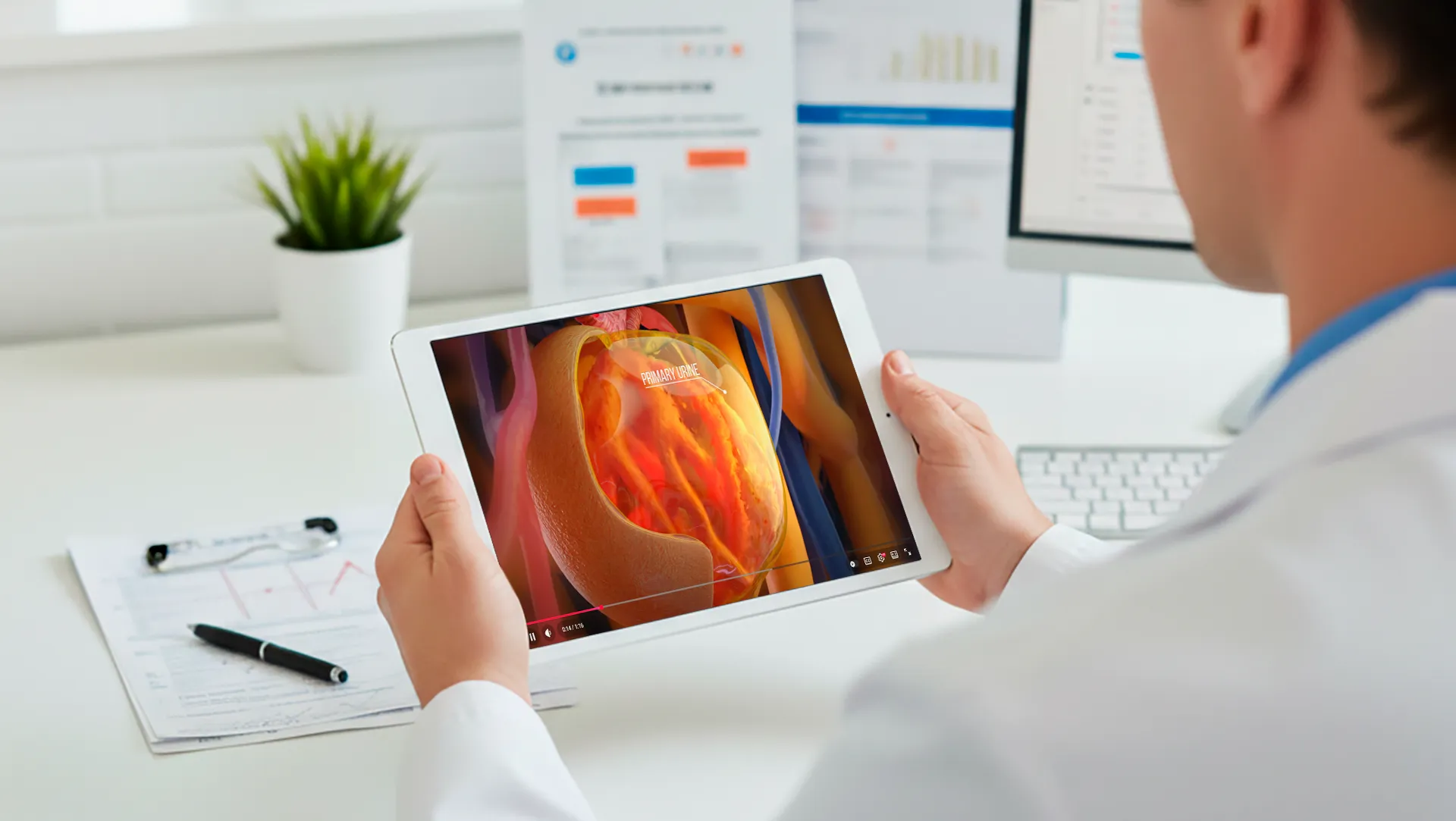
Table of contents
In 2026, attention spans are shorter than ever. Which means, if you need to convey complex medical ideas to a broad audience, you need the right format. Explainer video is still the best way to show how things work and make science feel understandable.
This article features a curated list of successful medical explainer videos, handpicked by the VOKA team. Alongside these shining examples, we break down what makes a medical video effective and share tips on choosing the right animation partner.
Our goal is to show you, the healthcare, biotech, and pharma teams, what’s currently trending in medical animation production. By the end of the article, you’ll have a better understanding of how to approach your own animation projects with confidence.
The heavy hitters: top medical device explainer videos
In our first section, we’re showcasing videos that transform complex scientific mechanisms and surgical steps into clear and visually engaging stories. For surgeons, videos enhance the patient consultation and aid surgical planning. For manufacturers and investors, they provide persuasive demonstrations of the precision, innovation, and clinical superiority of their products.
1. Root Canal Treatment
Studio: VOKA
Target audience: Dentists, medical device manufacturers, and investors.
Description: This animation provides a step-by-step visualization of a root canal treatment procedure. The video clearly demonstrates endodontic therapy from the initial cleaning to the final placement of an artificial crown. It helps dentists explain complex treatment plans and disease processes to their patients. Furthermore, it serves an educational purpose, helping medical students in learning the principles of managing dental pathology.
2. Laser Skin Treatment
Studio: Arcreative Media
Target audience: Dermatologists, healthcare providers, and skincare product manufacturers.
Description: This video visualizes a step-by-step non-ablative skin resurfacing procedure using the LaseMD system. It covers each stage of dermal rejuvenation, including the precise creation of micro-channels and the subsequent stimulation of the body's natural collagen production. With such a detailed demonstration, dermatologists can explain the cellular regeneration process and expected outcomes to patients, while biotech manufacturers can illustrate the efficacy of Thulium laser technology and specialized handpieces to investors, healthcare providers, and the general public.
3. Medical Device Animation: Atrial Fibrillation Ablation Surgery
Studio: AXS Studio
Target audience: Cardiologists, healthcare professionals, and medical device investors.
Description: For this video, there’s a step-by-step visual explanation of a cardiac ablation procedure for treating atrial fibrillation. From the precise navigation of the catheter to the application of pulsed field ablation to create tissue-selective lesions. The animation does a great job of displaying each stage of the intervention. For cardiologists, the video helps explain the management of heart rhythm disorders to their patients. In addition, biotech manufacturers can visually describe the advantages of configurable catheter morphology and non-thermal energy delivery to investors and healthcare providers at dedicated events, exhibitions, or via marketing materials.
4. Immediate anterior implant placement
Studio: Straumann
Target audience: Dentists and medical device manufacturers.
Description: This video details the Immediate Anterior Implant Placement procedure, from minimally invasive tooth extraction to the precise placement of the implant in the fresh socket. For surgeons, it explains how this approach preserves bone and soft tissue while speeding up treatment. Dental implant companies can also use the video to highlight the benefits of their implants, surgical kits, and materials to clinicians, investors, and distributors.
5. Ophthalmology glaucoma IOP drainage animation
Studio: Scientific Animations
Target audience: Ophthalmologists, healthcare providers, and medical device manufacturers.
Description: This video breaks down a minimally invasive glaucoma surgery step by step, showing the procedure from the initial navigation through the eye to the placement of a drainage device. It helps ophthalmologists explain how the surgery manages eye pressure to patients, and it also allows biotech companies to show how specialized micro-stents and surgical tools are used to investors and clinics.
Cinematic science: best mechanism of action (MoA) animations
Mechanism of action videos are excellent for how they transform complex biochemical pathways into engaging cinematic narration. By illustrating how diseases develop and how treatments intervene at a cellular level, these animations help educate patients, train professionals, and communicate the science behind new therapies.
6. How the Pancreas Regulates Blood Sugar
Studio: VOKA
Target audience: General public, patients, and early-stage pharma investors.
Description: This 3D animation shows how the pancreas works and how semaglutide helps regulate blood sugar. You’ll see the α- and β-cells in action, producing insulin and glucagon, and learn how semaglutide modulates their activity to lower glucagon levels and control blood glucose. Doctors can use such videos to explain treatments to patients, while patients and the general public can understand how therapies work, and biotech and pharma companies can use them to educate investors, partners, and healthcare professionals.
7. Sunscreen Scientific Animation (MoA)
Studio: Infuse Med
Target audience: General public and skincare investors.
Description: This medical mechanism of action video provides a detailed visual explanation of how sunscreens mitigate ultraviolet (UV) damage. With the help of high-quality 3D animation, it illustrates the protective process, from application through selective filtering of UVA and UVB wavelengths, demonstrating how this prevents DNA photodamage and safeguards skin integrity against burns and photoaging.
8. Coronary Artery Intervention
Studio: Arcreative Media
Target audience: Interventional cardiologists, hospital administrators, and medical device investors.
Description: This 3D medical animation showcases the first FDA-cleared robotic platform for percutaneous coronary interventions (PCI). The video demonstrates how the system allows physicians to perform complex vascular procedures from a radiation-shielded "interventional cockpit." You’ll see the robotic arm’s ability to manipulate guidewires and stents with sub-millimeter precision, reducing the risk of longitudinal geographic miss. By highlighting the shift from manual bedside work to a robotic interface, the video illustrates how the technology protects medical staff from chronic radiation exposure and orthopedic strain while enhancing the accuracy of stent placement for improved patient outcomes.
9. Basilard BioTech SoloPore
Studio: Nanobot
Target audience: Cell and gene therapy (CGT) developers, biotech researchers, and venture capital investors.
Description: This 3D scientific animation introduces the process of Deterministic Mechanoporation (DMP), showing how a proprietary microfluidic chip creates a single, precise pore in both the plasma and nuclear membranes simultaneously. Explore how this technique enables the direct delivery of genetic payloads, such as plasmids or CRISPR components, with higher cell viability and transfection efficiency than traditional electroporation. By highlighting the platform's scalability and its ability to engineer primary T cells en masse, the animation demonstrates how Basilard BioTech aims to resolve the manufacturing bottlenecks currently facing CAR-T and other advanced cell therapies.
10. Endoscopic Ultrasound (EUS) Procedure
Studio: Cincinnati Children’s
Target audience: Pediatric patients and their families, pediatric gastroenterologists, and medical students.
Description: This 3D medical animation details the use of Endoscopic Ultrasound (EUS) to evaluate internal organs such as the pancreas, liver, and gastrointestinal tract in pediatric patients. The video illustrates how a specialized echoendoscope is guided through the mouth to provide high-resolution ultrasound imaging from within the body, allowing for a closer look at ductal structures and blood vessels than traditional external scans. By visualizing these complex interventions, the animation helps families understand how EUS serves as a minimally invasive alternative to surgery for diagnosing and treating abdominal conditions in children.
The patient experience: animated healthcare explainer videos
Animated explainer videos show human anatomy and medical procedures in a clear, easy-to-understand way. They help patients learn about their care, feel more confident, and reduce anxiety. The examples below show how top studios use animation to improve patient understanding.
11. The renal corpuscle | How your kidneys filter and reabsorb in 3D
Studio: VOKA
Target audience: Healthcare educators, the general public, and patients.
Description: This VOKA medical animation explores the microscopic structures of the renal corpuscle through high-fidelity 3D reconstructions based on real clinical data. It highlights how advanced digital modeling can ensure clear anatomical visualization of the kidney’s intricate filtration system. Through precise rendering and dynamic movement, the video explains the mechanical functions of the glomerulus and Bowman's capsule, visually describing how the body separates waste from essential nutrients.
12. A cesarean section
Studio: Dandelion Medical Animation
Target audience: Healthcare educators, pregnant women.
Description: This video gives a clear overview of a cesarean section, showing how a baby is delivered through the mother’s abdomen when a vaginal birth isn’t possible. Using detailed 3D visuals, it explains complicated obstetric issues and why the surgery is needed in the first place. The animation also shows different fetal positions and placental conditions, helping mothers understand the potential risks and safeguards in labor. By making the process easy to follow, the video reduces anxiety and sets realistic expectations for care and recovery.
13. How does a woman's body produce milk?
Studio: Dandelion Medical Animation
Target audience: Healthcare educators, pregnant women, breastfeeding mothers, the general public, medical students.
Description: The video illustrates how the hormones estrogen and progesterone prepare the breasts during pregnancy, and how prolactin and oxytocin help produce and release milk after birth. It highlights the breast’s internal structures, including the milk-producing alveoli and the myoepithelial cells that push milk into the ducts. The animation explains how the body adapts to an infant’s needs, making it easier to understand the hormones and processes behind breastfeeding.
14. Irregular Periods? This Uterine Test Can Help Explain Why
Studio: Viz Medical
Target audience: General public, patients, and women experiencing uterine problems.
Description: This video offers a clear and accessible walkthrough of the endometrial biopsy procedure. Using detailed 3D visuals, it guides the viewer through each step of this common diagnostic test, which collects a small tissue sample from the uterine lining to investigate the causes of abnormal bleeding or hormonal issues. The video illustrates the precise clinical technique, beginning with the careful insertion of a thin catheter through the cervix and concluding with the gentle suction used to obtain the endometrial tissue. It explains the procedure to patients, providing a deep understanding of how it leads to a definitive diagnosis while helping to mitigate common fears and concerns.
15. Breastfeeding 3D animation
Studio: Now Trending
Target audience: General public and medical students.
Description: This 3D video shows how to achieve a successful latch for breastfeeding. It guides viewers through the process, from the baby’s natural “rooting” reflex to getting a deep, comfortable latch. The animation explains key techniques, like positioning the mouth correctly and forming a proper seal, and shows the rhythmic suck-and-swallow that ensures effective milk flow. By watching it, new mothers can better understand breastfeeding, feel more confident, and overcome common early challenges.
The 3 pillars of a winning video
VOKA’s extensive experience shows that the most effective medical animations are built on three core principles:
-
Scientific accuracy. First, the video should provide a scientifically precise representation of complex anatomy, physiology, and biotech concepts. This helps viewers understand how the body really works, turning abstract ideas into easy-to-follow visuals.
-
Structured step-by-step narration. A good medical explainer video outlines a logical procedural pathway, from the first to the last point. This structure helps people understand the whole procedure and builds trust in the information.
-
Audience-centered approach. A good video fits the needs of its audience. For patients, it should be clear and easy to understand, helping reduce anxiety. For medical professionals, it should focus on detailed procedures, the latest techniques, and professional terminology.
Together, these pillars ensure the video is not only informative but also persuasive and memorable for its diverse audience.
How to choose a medical video production partner
Creating high-quality medical animations is a hallmark of a strong production company. However, when selecting a partner, you need to consider additional factors beyond content alone.
A relevant and versatile portfolio
A studio's portfolio is your first and most critical piece of evidence. You should check whether the company has created content in your specific therapeutic area or for a similar type of product (for example, a minimally invasive device or a visualization of cellular therapy). You can also analyze their work for the above-mentioned pillars: Does it demonstrate scientific accuracy, clear step-by-step narration, and focus on a particular audience?
An integrated medical team
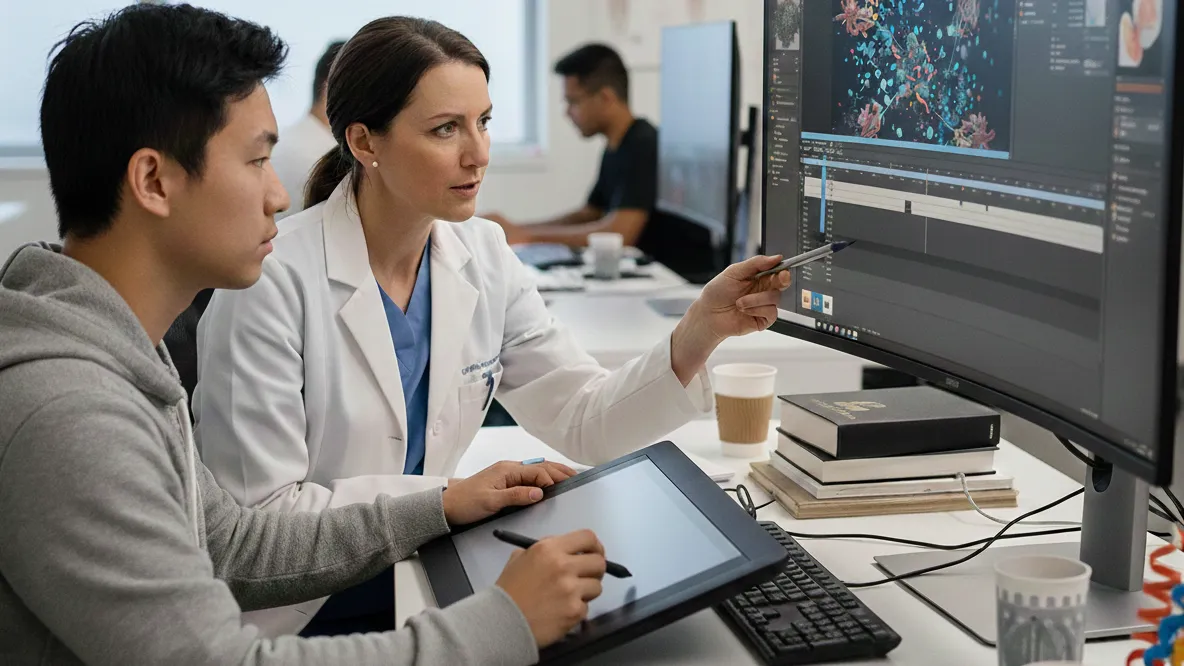
The most capable partners employ in-house medical specialists or consultants who oversee video production projects. These specialists help with initial research and scriptwriting, explaining complex concepts and guiding the production team on how to present them correctly. They also review the work at every stage, from 3D modeling to lighting, ensuring everything is scientifically accurate.
Client feedback and testimonials
A good agency should be transparent about its track record and willing to provide references from past medical video production projects. You can contact previous clients and ask how the studio communicates, handles customer feedback, and meets tight deadlines. This will help you choose a company that aligns with your expectations and working style.
Conclusion
The most effective medical explainer content unites accuracy, structured step-by-step narration, and highly detailed 3D visuals. Only the combination of these factors allows explainer videos achieve their ultimate goal: making the complex topics comprehensible.
If you’re planning to create a medical explainer video and looking for a production partner, it’s important to consider not just visualization skills. You should look for a versatile portfolio and an integrated medical oversight process, as well as ask for feedback from the agency’s previous clients. All together, these factors will ensure smooth, efficient, and pleasant collaboration.
FAQ
1. What is the best style for a medical explainer video?
The best style for a medical explainer video depends primarily on your audience, message, and budget. Common effective styles are 3D animation, which is ideal for visualizing internal biological processes. 2D motion graphics can be good for cost-effectively explaining abstract concepts or data, while mixed media combine live-action with graphics for relatability and detail.
2. What is the difference between an MoA animation and an explainer video?
An MoA animation is a detailed subtype that focuses exclusively on the biochemical pathway of a drug or therapy at a cellular level, with a goal of scientific accuracy. A medical explainer video is a broader category that explains any healthcare topic, like a disease or device, to a target audience. In other words, the MoA video is one type of medical explainer.
3. How much does a high-end medical explainer video cost?
The cost for a high-end medical explainer video typically starts between $25,000 and $75,000 or more for a professional 60-90 second 3D animation. The final price varies widely based on key factors like the choice of 3D versus 2D animation, the visual complexity of the subject, the amount of required research and scripting, the quality of voiceover talent, and whether multiple language versions are needed.
4. How long should a healthcare explainer video be?
A healthcare explainer video should be as long as necessary to communicate its message effectively, but the audience and platform dictate optimal length. For social media or a general web audience, 60-90 seconds is ideal. For patient education needs, 1.5-3 minutes allows for a more comprehensive explanation. Finally, healthcare professionals and investors need complex details, so 2-5 minutes will be suitable.
5. Why is 3D animation better than live-action for surgery?
3D animation is often better than live-action for depicting surgery because it provides clarity and control that live footage cannot. It allows for transparency, letting viewers see through tissue to observe instrument placement and hidden anatomy. It offers controlled focus by isolating specific structures while simplifying the visual clutter of a real surgical field. It is also safer and more ethical for training and planning, as it doesn't require a patient. Finally, it shows a standardized, idealized procedure free from the unique variations of any single live case.
6. What information is needed to start a medical animation project?
To start a medical animation project, you should prepare key information for the studio. This includes the project's primary objective and target audience, the single core message, a script or detailed outline, the target video length, all relevant reference materials like scientific papers or style guides, your approximate budget and timeline, and a clear plan for the medical, legal, and regulatory review process for approval.

Share
Table of contents
Thank you for your comment!
Your comment has been submitted for moderation and will be published soon. We'll email you once it’s live.