

How to teach human anatomy and physiology successfully

Share:

Copy link

Share via Telegram

Share on Facebook

Share on LinkedIn

Share via WhatsApp

Share on X

Share via Email
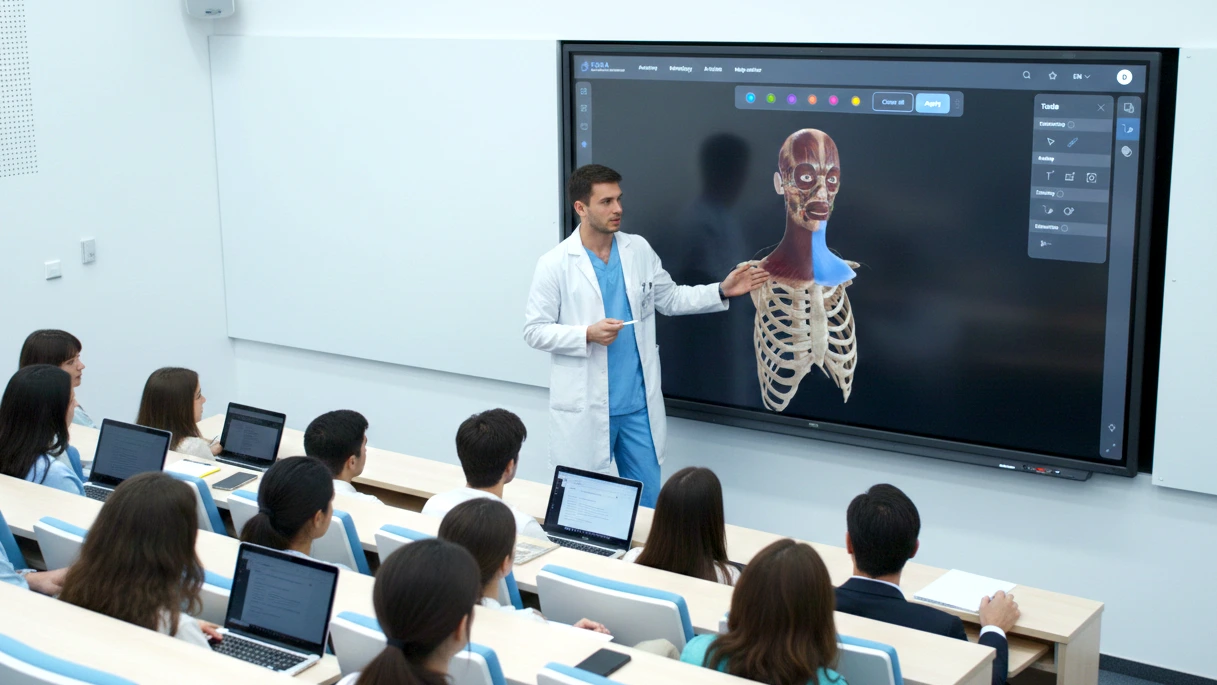
Table of contents
Anatomy and physiology (A&P) is the foundational learning that shapes how future doctors understand and apply knowledge about the human body. Yet, the central challenge in teaching A&P effectively is how to transform an overwhelming volume of complex content into simplified, easy-to-follow, and applicable knowledge for students. Moving students beyond mindless memorization to a genuine, functional understanding of the human body requires a deliberate shift in the educational process.
This guide aims to meet that exact need, offering a set of targeted pedagogical strategies. We’ve structured the article according to the typical educational journey of future healthcare professionals, from the first exposure to A&P concepts in high school and up to advanced, clinically oriented learning at the university level. Each stage highlights specific teaching methods and tools tailored to the learner’s cognitive readiness.
Core methodologies for teaching anatomy and physiology in high school
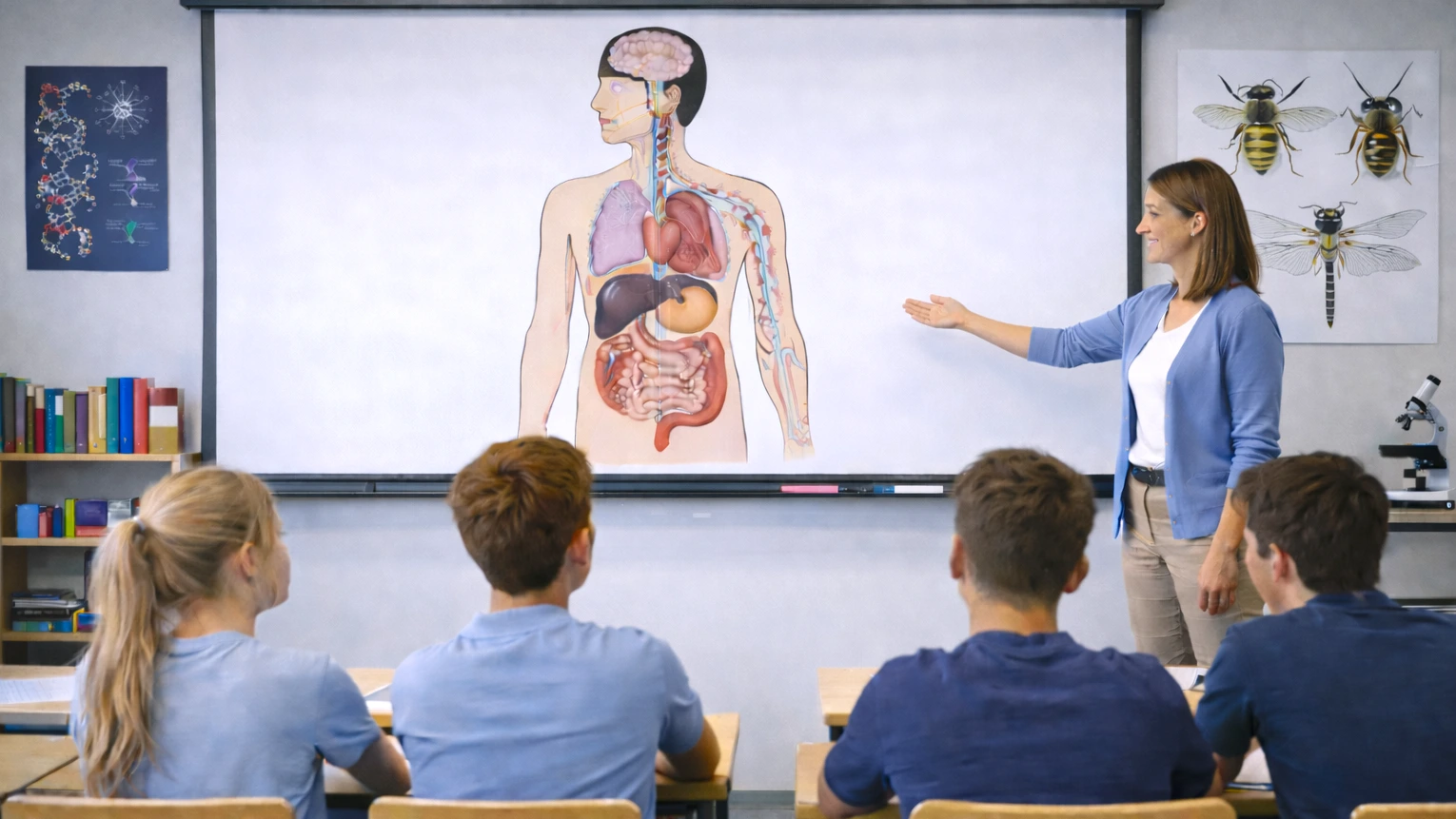
Young learners are first introduced to the basics of A&P through general biology courses. At this stage, the goal of anatomy and physiology activities for high school should not be in providing complex medical terminology, but in sparking curiosity about how the human body works.
It boils down to this: because high school learners are still developing (in terms of their actual physiology and their knowledge levels), it’s important that teaching methods factor this in and provide a consistent learning environment that helps to reduce cognitive load and ease tension.
Mastering the flow of information
Structuring the curriculum to follow the natural, logical flow of information is one way to ensure long-term student retention.
Lesson sequencing is such a method, where each lesson acts as a foundational block for the next (for example, explaining basic cell structure before diving into the way cells form functional units). This reduces cognitive load, allowing the brain to absorb new information efficiently. In addition, a sequenced curriculum based on gradual knowledge keeps learners reaching back to cement prior knowledge, repeating the retrieval of previously learned concepts to keep them fresh.
Introduce the body as an interconnected system
Instead of teaching the various systems in isolation, it’s more effective to frame them as a united network where every component is responsible for supporting the body’s internal balance.
For example, you can introduce nervous and endocrine systems as key mechanisms that allow the human body to maintain a stable internal temperature regardless of the environment. Starting with the nervous system, which acts as a signaller that senses environmental changes and quickly sends electrical signals. The slower, longer-lasting endocrine system uses hormones to adjust to new conditions. Both systems are responsible for different parts of the body’s adjustment, but it’s their interconnection that stabilizes body temperature.
Using this sequenced, narrative approach, we transform separate facts into a coherent single story, helping high school students see the human body as a dynamic, united entity.
Collaborative learning and formative assessment
A leading objective for teachers is to actively engage students in teamwork and practical learning challenges. These activities can take many forms, for example:
-
Small student groups working together on anatomy structures.
-
High-performing students explaining a physiological concept to their peers.
-
Dedicated student groups labeling complex anatomy diagrams.
This approach deepens A&P understanding through group discussion. In addition, by observing these group interactions, educators can see students’ comprehension in real-time, identify common misconceptions, and provide immediate, targeted feedback before moving on to new material.
Mitigating cognitive overload with visual tools
It’s no secret that the complexity of A&P can easily overwhelm students’ memories. To mitigate the problem, you can use simplified visual models, animated diagrams, or short videos to ease learning.
Beyond engaging visuals and animations, educators can add comments, descriptions, and questions, further assisting in breaking down sophisticated systems into smaller, easy-to-perceive segments.
Through that, you prevent cognitive overload, help memorize complex anatomy and physiology concepts, and ensure students get a solid foundational understanding before diving into more advanced peculiarities.
All the above-mentioned methodologies can help in building firm anatomy basics comprehension that can be expanded either in dedicated medical courses or during the next stages of medical education.
Vital tips on how to teach anatomy and physiology in college
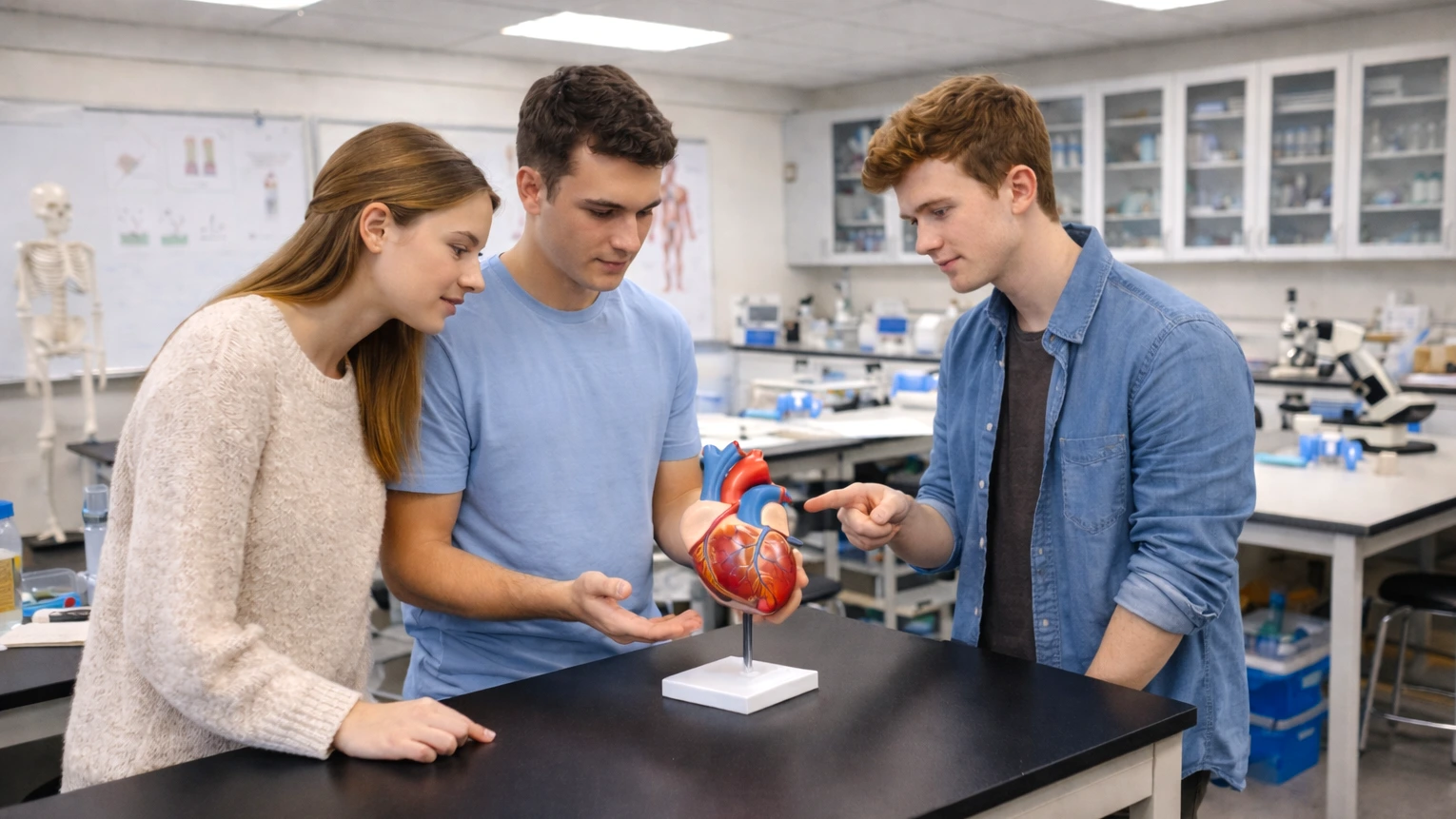
In the context of college, the practical application of knowledge for the first-year medical and nursing students should be ranked no.1. It implies the integration of advanced pedagogical methods designed to bridge the critical gap between theory and analytical, problem-solving skills. Implementation of the following methods is required for good performance at upper-level courses, board exams, and overall success during initial real-world clinical practice.
Integrating simplified clinical case studies
Implementation of real-world clinical cases will allow you to bridge the gap between abstract theory and practical relevance, introduce pathophysiology to the students, and build early clinical reasoning. For example, as an instructor, you can guide students through a case of dehydration. You can illustrate the intertwined roles of the kidneys (urinary system) in conserving water, the thirst mechanism (nervous system) in signaling fluid intake, and blood pressure maintenance (circulatory system).
Such small cases should stimulate students to apply their knowledge, develop critical thinking skills, and understand the sophisticated nature of human anatomy and the interdependence of its physiological systems and processes.
Contextualizing A&P through career application
Another method is framing every major A&P topic within the context of specific healthcare professions.
For example, when learning the muscles of the shoulder, students can be provided with a medical case simulation. The scenario can be the following:
1. An educator gives the initial patient info, regarding their symptoms (sudden pain, reduced range of motion, bruising). 2. Students decide on the range of medical specialists required for dealing with the case (physical therapist, radiologist, and massage therapist). 3. Explain which specialist will be responsible for a particular stage of treatment (physical therapist – for diagnosis and recovery planning, radiologist – for definitive MRI, massage therapist – recovery after the acute phase).
This strategy dramatically increases student motivation, retention, and overall engagement by providing a clear, compelling answer to the question, "Why do I need to know this?".
Implementing the kinesthetic model building
Getting students to construct physical models of anatomical structures will help them grasp the structure-function relationships of human body systems and organs and build their understanding of anatomical landmarks. You can use simple and cheap materials, like clay, modeling dough, or even pipe cleaners and thread.
A good illustration of this method comes from Ian Klein, a human anatomy instructor at Ohio University.
Apart from 300+ premade plastic models of various bones, organs, and systems, Ian has implemented a practice of group labeling and modeling. First, he asks students to physically label anatomy parts by attaching stickers. Second, students can build their own custom anatomy models, using simple materials, like paper, tape, glue, and papier mache.
This activity encourages learners to explore the shape, scale, and spatial relationships of organs, bones, and systems. Furthermore, the process of manual building reinforces memory and provides a powerful 3D reference, making it especially effective for understanding complex topics (for example, the branching of the bronchial tree).
Interactive assessments and visual diagnostics
Examination is one of the most vital parts of verifying students’ material comprehension. However, traditional anatomy tests usually focus on the recall of isolated facts and can’t guarantee that the learner has achieved spatial understanding of the anatomy concepts.
To address this, consider incorporating more interactive and visually rich assessment formats that go beyond simple identification tasks. For example, you can:
-
As an educator, you can make students interpret physiological data from a simulated case. For example, a 60-year-old patient with a 30-year smoking background demonstrates abnormal ABG and spirometry results. The task is to find the functional connection between the numbers and specific structures in his respiratory system that are malfunctioning.
-
Presenting students with 3D pathological cases and having them identify the affected anatomical structures.
-
Asking students to describe the difference between the given pathology and normal anatomy.
Such assessments help students build the practical knowledge needed for success in advanced courses, board exams, and clinical training.
Leveraging digital tools for medical schools and universities
The medical curriculum of dedicated medical schools and universities is the last stage in preparing students for future real-world practice. Through that, the main focus should be on ensuring a deep, integrated understanding of anatomy, physiology, and pathologies.
The method for educators to achieve that is by introducing sophisticated digital solutions. These tools are essential for transforming abstract concepts into tangible, interactive experiences, allowing students to safely dissect complex systems, visualize pathological processes, and build the confidence required in clinical practice.
3D models for teaching complex anatomy and pathology
Implementation of interactive 3D models of human anatomy is a powerful method of combining learning efficiency enhancement and advanced interactivity.
Interactive 3D anatomical models are highly effective for achieving the in-depth comprehension required at the university level. But unlike college, the focus should be on helping students investigate the complex interplay of body systems, rather than just presenting them.
For example, the use of advanced visualization tools like VOKA can provide virtual dissection, where learners can isolate specific systems and visualize complex spatial relationships between structures like nerves, vessels, and organs.
Such an active exploration strengthens the deep understanding of the human anatomy systems’ interconnection more than any other observation method.
Immersive virtual simulation-based scenarios
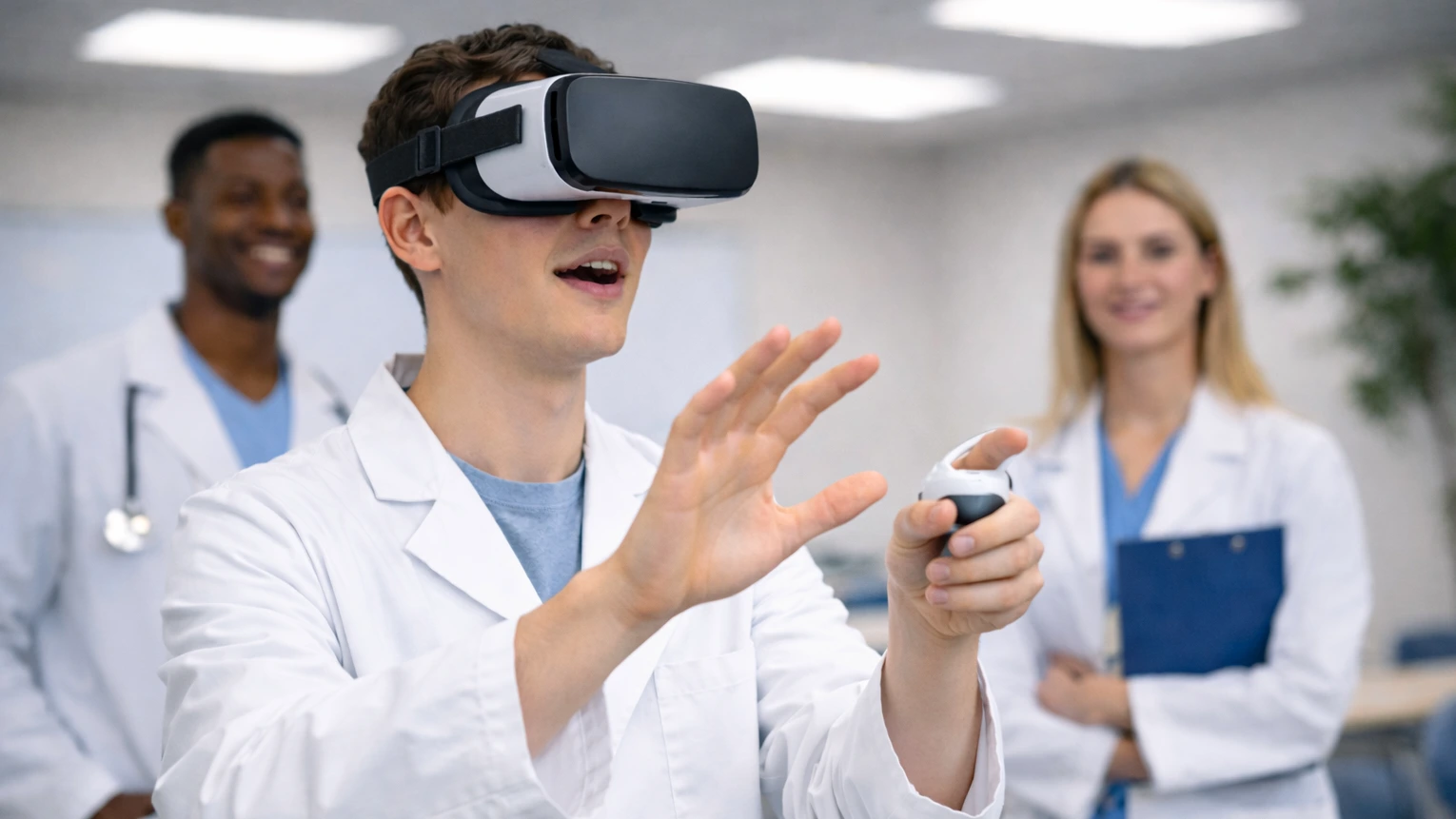
In A&P courses, AR and VR tools can simulate real physiological processes and clinical situations, letting students safely explore the human body.
As an educator, you can use such tools and promote dedicated VR simulations for surgical training. Through that, you transform abstract physiological concepts into tangible experiences, connecting the cause and the effect in a memorable, interactive way.
In addition, you can evaluate students’ communication skills and raise the overall level of their confidence by imitating patient sessions, using platforms like MedVR Education. It offers dozens of real-world scenarios that simulate accidents, emergency calls, and patient consultations. Students can ask questions, receive answers from virtual patients, and choose options for further actions and recommendations. The implementation of such solutions into the curriculum allows students to get through real-world medical situations, while you, as an educator, receive an opportunity to measure the communication skills of the future doctors and nurses.
A study at Ajou University School of Medicine with 40 fifth-year students found that after just one simulation, students felt less anxious, more confident, and better prepared for the next session.
Introducing the flipped classroom approach for active learning
Another way to make classes more efficient is to save lecture time. Often, instructors spend a lot of time explaining the agenda or introducing the main topic.
To fix this, teachers can move the initial learning outside the classroom. The “flipped classroom” approach implies students get familiar with theoretical learning materials (textbooks, dedicated articles, and videos) before classes. Through that, you solve two problems:
1. You save time on the theoretical introduction, as the students already comprehend it. 2. You transform lecture hours into active learning sessions where each minute is dedicated to practical problem-solving, case study analysis, targeted guidance, and more.
For instance, the educator can assign students to read articles on specific anatomy or pathology topics on online resources like VOKA Wiki, which offers dozens of articles written by professional doctors and complemented with comprehensive 3D visuals.
Another helpful aid in the flipped classroom approach is video lessons. According to a recent study, video lessons demonstrated a positive effect on knowledge acquisition and skills development in areas like dentistry, nursing, and medicine. The efficiency of video lessons lies in the combination of enhanced visualization and the ability for students to learn at their own pace, easily shifting their focus to the aspects they need.
Implementing effective gamification into the study process
Another common way to use digital tools in A&P is through gamified learning platforms. Educational games help students retain information and strengthen long-term memory.
For example, Sultan Qaboos University in Oman conducted this review based on 15 studies on the use of gamification in A&P education. Most of the studies reported that serious games improved students’ anatomy knowledge and boosted their engagement, motivation, and specific skills. They also noted higher task-completion rates and better teamwork among students.
The games presented in studies focused on various topics, ranging from general anatomy and certain anatomical branches. By type, the games represented quizzes, digital boards, and AR and VR simulations.
This systematic review of multiple studies highlights how gamification enhances anatomy learning outcomes, improving knowledge acquisition, driving competition, and increasing students’ motivation.
Conclusion
Summing up, teaching anatomy and physiology effectively requires more than traditional lectures. By integrating the above-mentioned methodologies, educators can create an active learning environment that deepens students’ comprehension of complex concepts.
Among the many instructional methods available, 3D visualization and virtual simulations stand out as especially effective. They give students a chance to explore anatomy dynamically and practice clinical reasoning in a safe, controlled environment. Tools like VOKA 3D Anatomy & Pathology provide this level of interactivity, helping learners see how anatomical structures and pathologies connect within real clinical scenarios. You can also find out how to teach anatomy and physiology with VOKA, transforming your classrooms and captivating your students with interactive 3D materials.
FAQ
1. How to make teaching anatomy and physiology fun?
One of the most efficient ways is to incorporate interactive, game-like elements into learning sessions. Use group competitions, such as encouraging students to build physical anatomical models or utilize educational apps with quizzes. These methods allow you to transform passive memorization into an interactive and enjoyable learning experience.
2. What are the key benefits of using 3D visualization over traditional plastic models?
3D visualization offers more advanced dynamic interaction. Unlike static plastic models, digital tools allow students to isolate specific structures, rotate them 360 degrees, visualize layers from skin to bone, and see animated physiological processes (for example, blood flow or nerve impulses). Through that, you achieve a deeper understanding of spatial relationships and functional connections that plastic models cannot replicate.
3. What resources are available for continuous professional development for A&P educators?
Numerous organizations offer a great variety of resources for professional self-development. The Human Anatomy & Physiology Society (HAPS) provides annual conferences, workshops, and possesses a large online community. Online courses on digital platforms like Coursera are also valuable for staying current with educational research and technology, as they also focus on providing advanced pedagogical techniques. Finally, VOKA 3D Anatomy & Pathology provides hundreds of interactive 3D models of human anatomy systems and various pathologies. Features like quick search and the ability to create personal collections allow educators to quickly find the material they need or build custom libraries necessary for the particular course.
4. How can I connect A&P concepts to real-world health science careers?
Integrate simplified real-world case studies into your curriculum. For example, you can present a simplified patient scenario and make students diagnose the issue by identifying the affected systems. Through that, you will make them familiar with the clinical reasoning used by doctors, nurses, and physical therapists, making the knowledge immediately relevant.
Make VOKA your preferred source
See more VOKA articles in Google Search

Share
Table of contents

Thank you for your comment!
Your comment has been submitted for moderation and will be published soon. We'll email you once it’s live.