

3D animation vs. live-action video vs. 2D animation: which is best for healthcare and medical marketing?

Share:

Copy link

Share via Telegram

Share on Facebook

Share on LinkedIn

Share via WhatsApp

Share on X

Share via Email

Table of contents
Healthcare teams often invest in video content before realizing a key point: the format can determine whether the message is understood or not.
To achieve optimal clarity, you must align your project goals with the specific strengths of various video formats. These are:
-
3D animation. Makes internal anatomical and scientific processes visible.
-
Live-action video. Builds emotional trust, showcasing real people and physical environments.
-
2D animation. Simplifies abstract concepts, patient instructions, and public health awareness messages.
At VOKA, we visualize complex medical topics every day, so we see firsthand where each format works best in practice. In this article, our experts break down the strengths of each approach and when to use them.
3D animation vs. live-action video vs. 2D animation: the core differences
Choosing the right visual format for healthcare communication depends on the subject, your target audience, and how long the content needs to remain accurate.
Live-action video is often used to build trust through real patient and physician stories, but it is limited when explaining internal biological processes. 2D animation is effective for simplifying abstract concepts and workflows, while 3D animation enables detailed visualization of anatomy, physiology, and other invisible mechanisms.
The following table provides a summarized comparison of all three formats.
What is 3D medical animation?
3D medical animation is the use of three-dimensional computer graphics to visually simulate and explain complex medical, anatomical, physiological, and surgical concepts.
Unlike traditional illustration or flat imagery, it provides an accurate, dynamic representation of biological structures and processes that a standard camera can't capture.
Apart from visual engagement, its true value lies in its explanatory power. 3D medical animation translates intricate, invisible science into understandable narratives.
A systematic review found that 3D visualization tools can improve anatomical understanding and spatial comprehension compared to traditional 2D learning resources, particularly when learners need to understand complex three-dimensional relationships.
Therefore, 3D makes complex concepts clear for physicians, patients, students, and investors alike, without compromising medical accuracy and visual quality.
What is a live-action healthcare video?
Live-action healthcare video is content captured with real-world cameras, physical environments, and real people, such as patients, physicians, and medical staff.
The value of such videos is unchallenged when the human element is central to the message. They capture authentic human emotion, body language, and vocal nuances. Consequently, they become the most powerful tools for building trust, empathy, and credibility in the healthcare space.
While live-action is perfect for emotional connection, it is limited by the laws of physics and the capabilities of a camera. Live-action video can’t directly show what happens inside the human body. It can’t track a drug at the cellular level, peer inside the internal mechanics of a medical device, or visualize hidden physiological processes. To achieve that, you will have to combine it with other types of animation or apply post-production visual effects.
What is 2D medical animation?
2D medical animation is the use of flat, two-dimensional digital graphics and vector art to explain medical concepts. Instead of aiming for three-dimensional realism, it relies on simplified visuals that move within a two-dimensional plane.
Though it lacks the cinematic scale of 3D, 2D video is the best choice when the primary goals are clarity, speed, accessibility, and simplification.
It is highly effective for simplified communication, but it lacks the anatomical depth, spatial precision, and visual realism necessary for depicting complex scientific mechanisms. If your project has to show accurate pathology, surgical techniques, or the pharma and biotech MoA, 2D will hardly tell that story accurately.
Which format do you need?
Criteria on choosing the right format
The right format depends on what you need to communicate, who your audience is, and what outcome you want to achieve. Before making a decision, consider the following factors:
-
Complexity of the subject matter. If you need to explain anatomy, physiology, molecular interactions, or medical device functionality, 3D animation is often the most effective choice. For simpler concepts, patient instructions, or service overviews, 2D animation may be sufficient.
-
Level of scientific accuracy required. When visualizing internal structures, biological processes, or clinical procedures, 3D animation provides the precision and control needed to communicate complex information accurately.
-
Importance of real-world credibility. To present physicians, researchers, healthcare teams, hospitals, or laboratories, live-action footage offers authenticity that animation cannot replicate.
-
Type of learning experience. 3D animation excels at explaining how things work, while live-action video demonstrates how people interact. 2D animation is often ideal for simplifying processes, workflows, and educational content.
-
Production efficiency and scalability. For projects that require quick updates, multiple language versions, or social media adaptations, 2D animation is often the most flexible and cost-effective option.
-
Need for visual control. If the subject matter cannot be filmed directly, involves sensitive medical content, or requires viewers to see structures from impossible camera angles, 3D animation provides complete control over every visual element.
When 3D animation is the best choice
3D animation is typically the best choice when your subject matter is physically inaccessible, highly complex, or requires strict visual control. It allows bypassing the limitations of real-world cameras and flat imagery.
“One common mistake we see is trying to explain a complex MoA or device deployment with flat diagrams only. They can support the story, but when spatial relationships, anatomical placement, or motion inside the body matter, 3D usually prevents misunderstanding.”

Here are the subjects where 3D use will be necessary or beneficial:
-
Internal anatomy and physiology. 3D video can visualize areas that cannot be filmed directly, such as the beating heart or a blood vessel.
-
Microscopic concepts. It can easily scale down to the molecular or cellular level, allowing us to witness interactions that are otherwise invisible.
-
Procedural workflows. 3D animations provide a controlled, step-by-step visual environment where structures (organs, layers, tissues) can be isolated and highlighted without real-world distractions.
-
Device-related operations. 3D demonstrates exactly how a product functions, deploys, and interacts inside the body’s tissues and cavities.
-
Complex science. It acts as a cognitive bridge, helping non-specialists rapidly grasp advanced, abstract scientific concepts.
-
Sensitive content. It provides clean, clinical, and compliant visuals, eliminating the need for bloody surgical footage that might violate regulatory standards or alienate viewers.
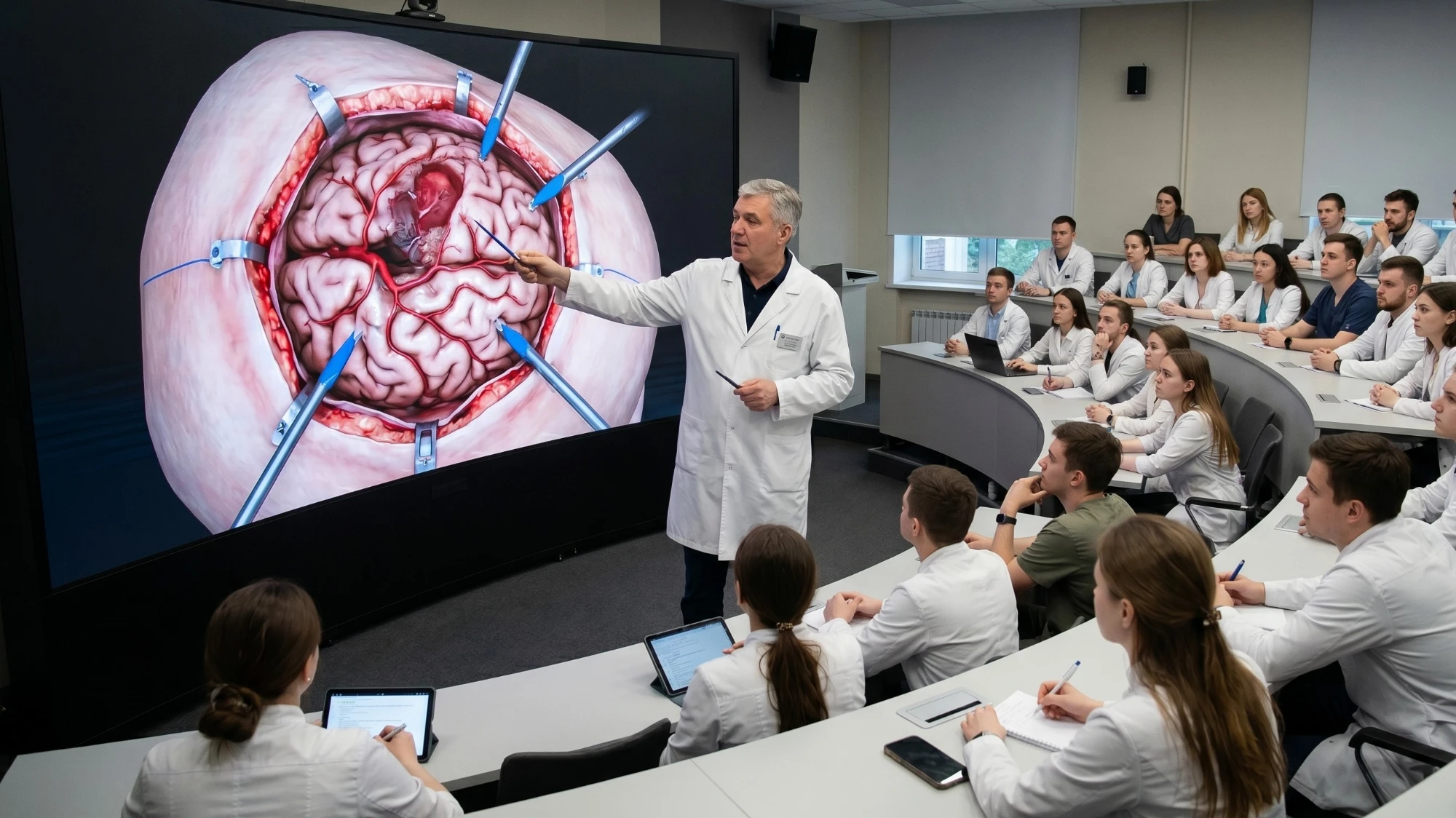
Overall, 3D visualization can be particularly valuable when communicating highly technical information. Research in medical education has shown that interactive and three-dimensional visualizations improve learners' ability to understand spatially complex anatomical structures compared to static imagery.
Therefore, we can highlight the following commercial use cases:
-
Mechanism of Action (MoA) animation. Depicting how a drug travels through the body, interacts with specific biological targets, and affects cells, tissues, or entire systems.
-
Mechanism of disease animation. Showing how a disease originates, progresses, and impacts the human body over time.
-
Surgical animation. Demonstrating procedural steps without the visual clutter of real-world surgery.
-
Medical device animation. Showcasing a device's engineering design, precise anatomical placement, internal mechanisms, and functional benefits.
-
Biotech investor video. Explaining breakthroughs and high-level science in a compelling visual narrative that helps business stakeholders quickly understand commercial value.
-
Pharma launch materials. Demonstrating pharma innovations at medical events and sales presentations.
-
Medical education content. Enhancing curricula visualizing complex anatomy, pathology, and clinical procedures for students and interns.
When live-action video works better
If the main goal is to build emotional trust, show real people, or present a team or facility, live-action video becomes a primary format.
Live-action video is usually better when the project depends on:
-
Human trust. Real people feel authentic. Seeing genuine expressions builds an immediate bond of empathy that digital graphics can’t replicate.
-
Emotional storytelling. Patient and physician narratives with real human faces and voices are ideal for sharing journeys of recovery and care.
-
Expert credibility. Having Key Opinion Leaders (KOLs) and leading physicians speak directly to the camera demonstrates the authority, professional validation, and prestige of your message.
-
Real-world environment. Showcasing the actual physical assets of your organization, such as hospitals, clinics, clean rooms, and research laboratories.

This is how live-action videos work in different use cases:
-
Patient testimonials. They capture real personal experiences. Seeing a real patient’s facial expressions and hearing the genuine emotion in their voice as they describe their recovery builds profound empathy and hope that no animation can replicate.
-
Physician interviews. They build immediate authority and credibility. Such interviews directly showcase a doctor's professionalism, warmth, and clinical expertise. Patients and peers see the experts behind their everyday duties and catch real emotion.
-
Key Opinion Leader (KOL) interviews. They add high-level expert trust. When respected medical authorities speak directly to the camera, their real-world presence gives weight and validation to a medical breakthrough, clinical trial, or new therapeutic approach.
-
Hospital facility tours. They showcase real clinical environments. When patients are preparing for a procedure, or families are choosing a care facility, they want to see the actual equipment and welcoming atmosphere. Such live-action tours help to demonstrate them and reduce overall anxiety.
-
Corporate medical videos. They are aimed at stakeholders, partners, and future employees and are meant to humanize the company or institution. Showing the actual scientists, executives, and team members, you translate a sense of transparency and shared mission.
For complex healthcare topics, live-action often works best as part of a hybrid format. Here, you complement real interviews with targeted 3D or 2D animations that break down the complex science.
When 2D animation is enough
2D animation can be the most efficient format when the subject doesn’t require anatomical realism, depth, or complex scientific visualization. It is a highly flexible and cost-effective choice for the following use cases:
-
Instructional content. Perfect for walking patients through basic, everyday preparations, such as what to do before a routine lab test.
-
Awareness campaigns. Excellent for broad public health initiatives, prevention campaigns, or disease awareness messages that need to be friendly, non-threatening, and highly scalable.
-
Workflow-based explanations. Demonstrating clinical workflows, digital health app interfaces, or detailing a healthcare service journey.
-
Simplified educational materials. Providing basic anatomy overviews, lifestyle and wellness advice, or treatment steps for general patient education.
-
Social-first media. Best for short and budget videos and rapid consumption across digital and social media campaigns.
Cost, timeline, and ROI: what really affects production value?
When considering medical animation, the discussion often leads to a classic misconception that 2D is cheap and 3D is expensive. In reality, pricing is never that simple.
The true size of investment is determined by the structural complexity of the assets, the depth of scientific accuracy required, and how the content is engineered for future use.
Key factors that affect cost
The final scope of work is primarily shaped by several interconnected layers:
-
Scientific complexity. More complex topics require deeper research, medical scripting, and additional expert reviews.
-
Level of realism. Realistic visuals, complex lighting, and organic tissue simulation require more rendering power and production effort than simplified models.
-
Number of scenes. Sophisticated environments and scenes increase the time required for modeling, animation, and post-production.
-
Existing assets. Utilizing reusable 3D models from an existing library reduces future production effort and overall cost.
-
Review cycles. Multi-step medical, legal, and regulatory reviews can extend the production timeline.
-
Localization. Adapting voiceovers, subtitles, on-screen text, and cultural nuances for international markets scales global reach but increases the initial budget.
One of the most overlooked aspects of medical animation ROI is the asset's longevity. Live-action video can be incredibly powerful for human storytelling, but it suffers from a massive flaw. If a clinical guideline changes, a device gets a hardware update, or a new drug indication is approved, a live-action project often requires an expensive reshoot.
In contrast, 3D and 2D animation can often be quickly updated, localized into multiple languages, reformatted for different channels, or reused across campaigns.
Video format decision matrix
This decision matrix serves as a short guide for selecting the most effective video format for your specific project goals.
Hybrid approach: combining 3D, live-action, and 2D animation
In many healthcare and life science projects, the most effective solution is a hybrid approach. Live-action builds human trust, 2D animation simplifies abstract structures, and 3D animation visually explains complex processes happening inside the body.
By combining these formats, you can address multiple communication goals within a single video asset.
This table provides only a few successful examples and use cases:
A hybrid approach is especially useful for pharma, biotech, and medtech projects. Here, the combination of formats builds both emotional trust and ensures scientific clarity. Therefore, it covers the needs of multiple target audiences.
Why choose VOKA for medical visualization?
When explaining intricate biological systems, the clarity of your visual communication is just as important as the science behind it. VOKA knows how to create 3D medical animation for teams that need to explain complex medical products, mechanisms, procedures, and scientific ideas with clarity.
The company achieves that through a number of factors.
Dedicated medical and scientific portfolio
Unlike most creative studios, VOKA focuses exclusively on medical and scientific visualization. Our portfolio includes pharmaceutical mechanisms, biotechnology innovations, and advanced medtech devices. This specialized focus ensures that we understand the needs and problems of the healthcare industry. Consequently, it reduces the communication gap between your team and our creative production.
Expert medical 3D artists
Medical visualization demands a unique combination of artistic skill, technical precision, and domain knowledge. VOKA's experienced team of 3D artists specializes in creating detailed anatomical models, pathological scenarios, and procedural animations that accurately reflect real-world medicine. Their expertise helps turn complex concepts into engaging visuals for healthcare professionals, patients, students, and stakeholders alike.
Scientific accuracy as a priority

In healthcare, precision is mandatory. VOKA’s content development process integrates rigorous medical review and subject-matter expertise. The work of our in-house medical professionals ensures that every structure, pathway, and physiological process is rendered with the anatomical fidelity required for professional medical education and clinical practice.
Content scalability for every use case
High-fidelity 3D visualization serves as a multi-purpose asset. VOKA's animations provide strong commercial and operational utility by supporting:
-
Medical education & training. Enhancing curriculum for universities, medical schools, and clinical training.
-
Product presentations. Clearly demonstrating the functionality of complex medical devices or drug delivery systems to HCPs.
-
Investor communication. Explaining sophisticated biotech or pharma R&D concepts to investors and stakeholders.
-
Marketing & advertising. Elevating commercial presentations and digital outreach with engaging, scientifically grounded visuals.
Conclusion
Choosing the right healthcare video format means matching your goal to your subject. Use live-action to build emotional trust through human stories, and 2D animation for abstract concepts or patient instructions. However, when you need to visualize internal anatomy, surgical steps, or molecular mechanisms, 3D medical animation is the only suitable format.
If your project requires explaining complex products, procedures, or scientific ideas with absolute visual clarity, VOKA can help. Contact VOKA to transform your sophisticated medical data into high-fidelity 3D assets that educate, engage, and inspire.
FAQ
1. Is 3D animation better than live-action video?
Neither is universally better. Live-action video excels at humanizing a brand and building emotional trust through real-life testimonials. However, 3D animation is better for visualizing internal anatomy, microscopic biological processes, and the mechanisms of medical devices that cameras can’t capture.
2. Is 3D animation better than 2D animation for medical videos?
3D animation is better for complex topics requiring anatomical precision, spatial depth, and realistic 360-degree rotations. 2D video is better when the primary goals are simplification and fast and cheap production. The best use cases are demonstrating abstract concepts, administrative workflows, or basic patient instructions.
3. What is the best video format for pharma marketing?
A hybrid format combining live-action and 3D medical animation is best for pharma marketing. Live-action interviews with physicians or KOLs build clinical credibility and trust, while 3D animation clearly demonstrates the drug’s MoA and its interaction with cellular targets.
4. When should a healthcare company use live-action video?
A healthcare company should use live-action video when the message centers on human connection and physical environments. It is the ideal format for authentic patient stories, physician or staff recruitment interviews, opinion leader validations, and virtual tours of hospital facilities.
5. When is 2D animation the best choice?
2D animation is the best choice for broad public health awareness campaigns, step-by-step patient instructions, and fast-paced social media content. It excels when anatomical realism is unnecessary, and information must be accessible and easily scalable.
6. Can 3D animation and live-action video be combined?
Yes, a hybrid approach is highly effective. For example, a real physician speaks on camera to establish authority, while the video seamlessly cuts away to a detailed 3D animation. The animation can illustrate the internal physiology or surgical steps being discussed.
7. Is 3D medical animation expensive?
Not necessarily. While 3D requires more initial rendering power and modeling expertise than 2D, its complexity can be partially managed by using existing asset libraries. Furthermore, 3D offers a high long-term ROI because digital models can be easily updated, localized, and reused.
8. What is the best video format for medical device marketing?
3D medical animation is the best format for medical device marketing. It allows companies to showcase engineering designs, demonstrate exact anatomical placement inside the body, and visualize internal mechanical functions and deployments. All of this happens without the visual clutter or regulatory compliance issues of real surgical footage.
Make VOKA your preferred source
See more VOKA articles in Google Search

Share
Table of contents
Thank you for your comment!
Your comment has been submitted for moderation and will be published soon. We'll email you once it’s live.