

Video marketing for healthcare: a practical guide for 2026

Share:

Copy link

Share via Telegram

Share on Facebook

Share on LinkedIn

Share via WhatsApp

Share on X

Share via Email
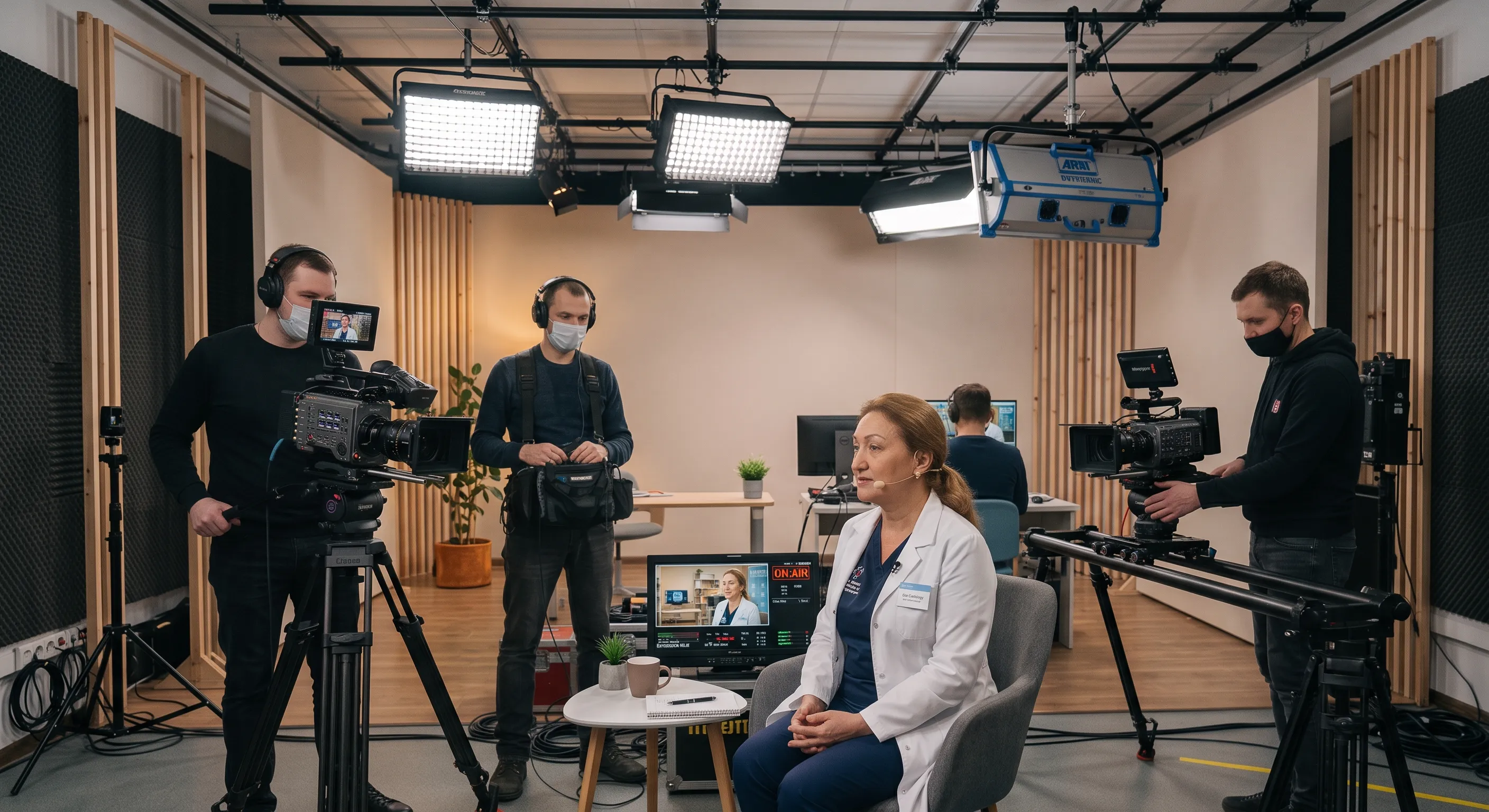
Table of contents
Healthcare video production is rarely limited by creativity alone. Many challenges appear before production even begins: choosing the right format, defining the messaging, and making sure the content meets medical and regulatory requirements.
At VOKA, we work with pharma, biotech, and MedTech companies to solve these challenges every day. In our experience, successful healthcare video marketing depends on three key factors: understanding the audience, selecting the right visual approach, and making scientific validation part of the workflow from the start.
In this guide, we share practical insights from our experience helping healthcare companies choose the right format, plan effective video strategies, and create content that meets both audience and business needs.
Key takeaways
1.
Effective healthcare video starts with the target audience and communication goal. Patients, HCPs, and investors need different levels of detail in describing the same healthcare innovation.
2.
Video performance should be measured by business outcomes, not views alone. Lead generation, appointments, product inquiries, conversions, and other metrics provide a clearer picture of whether the content is working.
3.
One production can support multiple communication needs. Reusable 3D assets and recorded content can be adapted into educational videos, social clips, sales materials, presentations, and localized versions.
4.
The strongest healthcare video strategies combine different formats. Live action can create human connection, while 3D animation can explain the science behind a treatment or procedure.
We will start by defining what video marketing in healthcare is and why it is important.
What video marketing for healthcare is and why it matters
Video marketing for healthcare uses video content to educate patients, engage healthcare professionals, promote medical products, and build trust. It covers formats ranging from patient education and testimonials to webinars and product demonstrations.
Its real value is that video can show what other formats can’t.
For example, pharmaceutical companies often use medical video to explain complex mechanisms of action that are difficult to communicate with text or static visuals. Hospitals can use video to prepare patients for procedures and help them understand what to expect.
In practice, the right video simplifies complex information, reduces uncertainty, and helps audiences make more informed decisions.
What makes video marketing in healthcare different?
Healthcare video marketing presents challenges that go far beyond creative production. Unlike most industries, success depends not only on compelling visuals but also on scientific accuracy, regulatory compliance, and the ability to communicate the same medical concept to very different audiences.
Complexity and invisibility of medical information
Some of the most important healthcare stories happen where a camera can’t go.
Drug mechanisms occur at the molecular level, diseases progress inside the body, and medical devices often function beneath the skin. As such, healthcare marketing videos frequently need to visualize:
-
Molecular and cellular interactions;
-
Human anatomy and physiology;
-
Disease progression;
-
Treatment pathways;
-
Surgical procedures.
Explaining these processes requires far more than interviews or live-action footage. This is why 3D medical animation has become an essential communication tool for pharma, biotech, and MedTech companies.
Multiple audiences & messages
The same healthcare product often needs completely different messaging depending on who is watching.
-
Patients: What does it do, and what does it mean for me?
-
HCPs: How does it work, and what does the evidence show?
-
Investors: What makes it valuable, and what is its potential?
The science stays the same, but the message, visuals, and level of detail need to change. In practice, we often adapt one core video into several audience-specific assets instead of starting from scratch each time.
Regulatory problems
Healthcare marketing videos need to meet both scientific and regulatory requirements. Depending on the project, this can involve:
-
HIPAA compliance and protection of PHI;
-
Patient consent and authorization;
-
MLR/PRC review for pharmaceutical content;
-
FDA and FTC requirements for promotional communications.
That’s why compliance should be considered from the start. In our experience, involving medical, legal, and regulatory teams early helps reduce revisions, avoid approval delays, and keep production on track.
Types of marketing healthcare videos by goal
In healthcare video marketing, there is no universal video that serves every purpose. Different goals, audiences, and stages of the customer journey call for different formats. Understanding which type of video fits each objective is the foundation of an effective healthcare video strategy.
The table below summarizes the most widely used healthcare video formats and where they deliver the greatest value.
Patient education & explainer videos
Such videos help patients quickly grasp a condition, treatment, or procedure without getting lost in medical terminology. They work especially well when patients need information before making a healthcare decision.
Practical tip from VOKA: Don't try to explain everything at once. Ask patients what they find confusing before you write the script. Questions from real patients, support teams, or clinicians reveal gaps you wouldn't spot from the medical literature alone.
3D medical animation & mechanism-of-action (MoA) videos
3D medical animation becomes essential whenever the key message involves processes that cannot be filmed. It can be molecular interactions and disease progression to implant mechanics and surgical anatomy.
Practical tip from VOKA: In our experience, one of the most important decisions in the 3D medical animation production process is what scientific details to include and what to simplify for a specific audience. Before scripting, define the single question your audience should be able to answer after watching the video. An HCP may need to understand why a therapy is differentiated, while an investor may only need to see how the technology works and why it matters. The science can stay the same, but the narration should change.
Patient testimonials & success stories
Patient testimonials are most effective when the goal is to reduce uncertainty. Authentic experiences help future patients understand what to expect before, during, and after care, making healthcare feel more approachable.

Practical tip from VOKA: Don't script patient stories around marketing messages. Instead, structure them around the questions prospective patients ask most often. For example: "Will it hurt?", "How long is recovery?", or "When could I return to normal activities?". Also obtain appropriate patient authorization before filming or publishing testimonial content.
Doctor introductions & FAQ videos
Patients often make decisions long before speaking to a physician. Doctor introduction videos and FAQ content help answer common concerns early, reducing uncertainty and creating a more informed first interaction.
Practical tip from VOKA: Instead of recording a generic physician profile, build the video around the five or six questions patients ask most frequently before booking an appointment. This approach creates content that works both as a trust-building asset and as a long-term resource for websites, landing pages, and AI-powered search results.
Webinars, Live Q&A & procedure demonstrations
These formats work best when the objective is education rather than promotion. Unlike short marketing videos, webinars and procedure demonstrations give healthcare professionals the context needed to evaluate new therapies, devices, or clinical techniques.
Practical tip from VOKA: Treat every webinar or live session as a source of future content. Record it once, then repurpose the material into short educational clips, FAQ videos, social media snippets, and conference presentations. This approach extends the value of a single production and helps maintain consistent scientific messaging across multiple channels.
How to build a healthcare video marketing strategy?
A successful video marketing strategy for healthcare goes beyond producing high-quality videos. It starts with clear business objectives, aligns each video with the right audience, and incorporates compliance, distribution, and performance measurement from the beginning. Following these steps will help you create healthcare videos that deliver measurable results.
1. Define your objectives and KPIs
Every healthcare video should support a specific business objective. Defining success before production helps you choose the right format, messaging, and distribution channels.
Start by identifying your primary goal. It can be:
-
Increasing brand awareness;
-
Improving patient knowledge;
-
Supporting HCP education and clinical adoption;
-
Generating more appointments or qualified leads;
-
Launching and promoting a healthcare product;
-
Engaging investors or strategic partners.
Then measure outcomes that reflect that objective, such as lead generation, appointment bookings, HCP engagement, conversion rates, or product inquiries.
Note: the strongest healthcare videos are built around a single measurable objective. Trying to achieve too many goals in one video usually weakens the message.
“The right healthcare video strategy starts with the audience, communication objective, and level of information required. The same medical innovation may need a patient-focused explainer, an HCP-oriented 3D MoA animation, and an investor presentation. All of them carry distinct values and emphasize different aspects. Our goal is to identify the right format, level of detail, and visual approach to make your video as efficient as possible”

2. Map your audience
Healthcare audiences differ in both knowledge level and decision-making needs. Before writing the script, define exactly who the video is intended for and what they need to understand.
Typical audiences include:
-
Patients and caregivers seeking reassurance and easy-to-understand explanations.
-
Healthcare professionals evaluating scientific evidence and clinical value.
-
Pharma, biotech, and MedTech buyers comparing products and solutions.
-
Investors and strategic partners assessing innovation and commercial potential.
Tailoring the message to a single audience improves clarity, engagement, and overall campaign performance.
3. Choose the right video format for each goal
Once the objective and audience are defined, select the video format that best supports them. As shown in the previous section, each format serves a different communication purpose.
For instance, if your message involves invisible biological processes, internal anatomy, or complex medical technologies, 3D medical animation is often the only format capable of communicating the science accurately. For trust-building and human connection, live-action interviews and testimonials remain the stronger choice.
Note: choose the format based on the question your audience needs answered, not on which video style is the most visually appealing.
4. Plan production with compliance in mind
Regulatory review should be part of the production process. Early alignment between marketing, medical, and regulatory teams helps prevent costly revisions later.
A practical workflow looks like this:
-
Script: validate scientific claims and key messages.
-
Storyboard: review visuals for medical accuracy and compliance.
-
Production: create approved content and avoid unsubstantiated claims.
-
Final review: confirm MLR/PRC approval, patient consent where required, captions, accessibility, and publication readiness.
Building compliance into each stage shortens review cycles and reduces the risk of major revisions before launch.
5. Distribute, measure, and optimize
Publishing a video is only the beginning. A successful healthcare video marketing strategy includes ongoing distribution and performance analysis.
Distribute videos across channels where your audience is most active. The possible options are the following:
-
Your website and product landing pages;
-
YouTube channel;
-
LinkedIn account for B2B healthcare audiences;
-
Email campaigns;
-
Sales presentations and HCP portals;
-
Social media.
Additionally, you should track outcomes that demonstrate business value. They include:
-
Lead generation;
-
Appointment bookings;
-
Product inquiries or demo requests;
-
Conversion rates;
-
Website traffic from video.
These metrics provide a clearer picture of ROI than view counts alone and help identify which video formats contribute most to business growth.
When to use 3D animation vs. live action (or both)

In healthcare video marketing, the right format depends on what you need your audience to see.
Choose 3D medical animation when you need to:
-
Show what's happening inside the body: visualize molecular, cellular, and physiological processes, disease progression, or mechanisms of action.
-
Explain how a medical device works internally: show implants, internal components, or device-body interactions that cameras cannot capture.
-
Visualize products that don't exist yet: present a new drug, device, or technology before it reaches the market.
-
Create reusable, PHI-free content: adapt visuals for different markets, languages, and audiences without reshooting or using patient data.
A good rule of thumb: if the most important part of your story is invisible, highly technical, or impossible to film, animation is usually the better choice.
Choose live-action video when you want to:
-
Build personal trust: feature physicians, researchers, patients, or company leaders.
-
Show real environments: introduce hospitals, laboratories, manufacturing facilities, or clinical settings.
-
Share real experiences: use patient testimonials, interviews, or expert opinions where authenticity matters.
-
Capture real events and interactions: record webinars, procedures, conferences, or educational presentations.
A good rule of thumb: live action works best when the people, places, or experiences are the story.
Why is combining both a good idea?
Some healthcare stories need both scientific clarity and a human connection. Live action can introduce the physician, patient, or researcher, while 3D animation can show what happens inside the body or explain how a treatment works.
For example, a physician may introduce a new therapy and explain its clinical value, followed by a medical animation showing the treatment’s mechanism of action at the cellular level. This combination allows audiences to connect with the people behind the science while gaining a clear understanding of how the innovation works.
This approach is especially valuable for pharma, biotech, and MedTech companies that need healthcare video production to communicate scientific innovations, educate HCPs, and support product launches.
How to keep healthcare video compliant & discoverable
A healthcare video needs to do two things before it goes live: meet the relevant compliance requirements and be easy for the right audience to find. Both should be considered during production, not added at the very end.
Compliance essentials
The exact requirements depend on the market, audience, and type of content, but common considerations include the following measures.
Protect patient privacy and PHI
If a video includes patients, clinical footage, or any private health information, organizations must ensure compliance with HIPAA requirements and obtain appropriate permissions.
You should consider:
-
Removing or protecting personally identifiable health information (PHI);
-
Obtaining documented patient authorization before using testimonials or clinical footage;
-
Reviewing how patient stories and outcomes are presented.
Complete MLR/PRC review for pharmaceutical content
Pharma videos often require review by medical, legal, and regulatory teams to ensure that claims, data, and visuals accurately represent the product.
Review should cover:
-
Scientific statements and clinical claims;
-
Product benefits and limitations;
-
Data visualization and references;
-
Required safety information or disclosures.
Maintain fair and balanced communication
Healthcare marketing content should avoid misleading claims and present information responsibly. Depending on the market and audience, companies may need to consider requirements related to promotional communications and advertising claims, such as FDA or FTC.
Video SEO & AI-search optimization
Uploading a video isn't enough to make it visible in search. The page around it also needs to give search engines and AI systems enough context to understand what the video covers.
Start with:
-
Embedding videos on relevant owned pages. Publishing videos on your website—such as product pages, patient education hubs, or resource centers—creates additional SEO value and keeps users engaged with your own content.
-
Adding transcripts and captions. Search engines and AI systems cannot interpret video content the same way humans do. Transcripts, captions, and detailed descriptions help platforms understand the topic, context, and relevance of your video.
-
Using structured data and video schema markup. Adding video schema helps search engines identify important information, including video title, description, thumbnail, duration, and publication date.
-
Applying audience-focused language. Healthcare content should reflect the way real audiences search for information. For example, patients may search for symptoms, while HCPs search for clinical evidence and mechanisms of action.
Well-structured, medically accurate, and properly sourced video content is more likely to be surfaced in search results and AI-generated answers.
Why choose VOKA for healthcare video & medical animation?
Healthcare organizations can choose from several approaches when creating video content. They can work with a general production agency, use stock medical footage, produce videos internally, or partner with a specialized medical animation studio.
The right choice depends on the complexity of the story. The following table provides a summary of these options.
For the most challenging healthcare stories, high-quality 3D animation is often the only format that can accurately communicate the science.
VOKA specializes in transforming complex medical concepts into clear, engaging visual experiences through:
-
Healthcare explainer videos and much more.
By combining medical expertise, scientific storytelling, and advanced 3D production, VOKA helps pharma, biotech, and MedTech companies explain innovations that cannot be captured with traditional video.
Conclusion
Effective healthcare video marketing is not about producing more content. It is about choosing the right format, message, and distribution strategy for each audience and business goal.
In our experience at VOKA, the strongest results come when video is treated as part of the communication strategy from the start. Whether the goal is educating HCPs, building patient trust, supporting a product launch, or explaining complex science, the format should serve the audience and the message.
Need help choosing the right format for your marketing video? Explore VOKA’s healthcare video production and 3D medical animation services.
FAQ
1. What is video marketing for healthcare?
Video marketing for healthcare is the use of video content to educate patients, engage healthcare professionals, promote medical products, and build trust across healthcare audiences. It includes formats such as patient education videos, medical animations, webinars, testimonials, and product demonstrations tailored to specific communication goals.
2. How much does healthcare video or 3D medical animation cost?
The cost depends on the project's complexity, length, level of scientific detail, and production requirements. Simple live-action videos may cost a few thousand dollars, while custom 3D medical animations explaining mechanisms of action or complex medical devices typically require a larger investment due to research, modeling, animation, and medical review. See our medical animation cost guide for a detailed breakdown, or use the 3D medical animation cost calculator to get a ballpark estimate for your project.
3. What types of videos work best for healthcare marketing?
The best format depends on your objective and audience. Patient education videos, testimonials, and product demonstrations all serve different purposes, with 3D animation being the preferred format for explaining complex scientific concepts that cannot be filmed.
4. How do you keep healthcare video HIPAA- and MLR-compliant?
Compliance starts during pre-production. Healthcare organizations should obtain patient authorization where required, protect PHI, ensure medical and legal review of claims, and follow applicable HIPAA, FDA, FTC, and MLR/PRC requirements before publishing promotional or educational content.
5. When should you use 3D medical animation instead of filming?
Choose 3D medical animation when you need to visualize internal anatomy, molecular interactions, mechanisms of action, disease progression, or medical devices that cannot be captured with live-action footage. Live-action video is generally better suited for patient testimonials, physician interviews, healthcare facilities, and other content focused on building authenticity and personal trust.
Make VOKA your preferred source
See more VOKA articles in Google Search

Share
Table of contents

Thank you for your comment!
Your comment has been submitted for moderation and will be published soon. We'll email you once it’s live.