

How pharma companies use 3D animation for product launches

Share:

Copy link

Share via Telegram

Share on Facebook

Share on LinkedIn

Share via WhatsApp

Share on X

Share via Email
Table of contents
Developing a new therapy can take years. Explaining it often turns out to be just as challenging. Many launches fail because the science behind the therapy is difficult to communicate to healthcare professionals, KOLs, investors, and commercial teams.
As therapies become more complex, traditional presentations and static visuals can’t explain treatment mechanisms and benefits effectively. This is why high-fidelity 3D medical animation has become a valuable launch asset. It helps companies show how a therapy works, what makes it different, and why it matters.
In this article, the VOKA team shares practical ways pharmaceutical companies use 3D animation to explain complex therapies, support product launches, and communicate scientific value to different audiences.
Why pharma product launches rely on 3D animation
Overcoming communication barriers at launch
Modern therapies often involve highly complex mechanisms, novel targets, or advanced technologies that can be difficult to explain through traditional presentations and static visuals.
3D animation helps bridge the gap between scientific complexity and audience understanding. Instead of relying on lengthy explanations, launch teams can visually demonstrate disease pathways, molecular interactions, and therapeutic effects in a way that is both accurate and easy to follow.
This is particularly valuable when introducing innovative medicines, biologics, gene therapies, or treatments targeting unfamiliar mechanisms.
Standing out in a competitive market
In a crowded market, launch success depends on differentiation. Investors and industry experts are overwhelmed by large volumes of scientific information, promotional materials, and competing product messages.
High-quality 3D animation enables pharmaceutical companies to communicate their unique value proposition more clearly and memorably. Whether used during congress presentations, digital campaigns, or sales interactions, 3D-based visual storytelling can help reinforce key product messages and improve recall.
3D visuals also make scientific content more engaging. This means that stakeholders are more likely to retain critical information about a therapy's benefits and clinical profile.
Driving HCP and KOL engagement
Healthcare professionals and key opinion leaders play a critical role in product adoption. Therefore, gaining their attention and trust requires effective scientific communication.
3D animation provides a powerful tool for educating expert audiences. Visualizing mechanisms of action, disease biology, and clinical outcomes can support scientific discussions and evidence-based decision-making.
As a result, many pharmaceutical companies incorporate animation into advisory boards, educational programs, congress activities, and scientific exchange initiatives throughout the launch process.
What makes a pharma animation successful?
To support launch objectives effectively, 3D animation must focus on the following traits.
Scientific accuracy
Scientific credibility is non-negotiable in pharmaceutical communications.
Every visual element, from molecular interactions to disease pathways, must accurately reflect current scientific evidence and align with approved messaging. Inaccuracies can undermine stakeholder trust and create regulatory challenges.
Successful pharma animations are typically developed in close collaboration with dedicated medical teams, scientific experts, and regulatory specialists to ensure accuracy at every stage.
Simplifying scientific complexity
The primary goal of animation is to make complex information easier to understand.
Effective animations translate intricate scientific and biological processes into clear visual narratives that audiences can absorb quickly. They highlight the most important concepts — such as an API (Active Pharmaceutical Ingredient) interaction — while eliminating unnecessary details that may distract from the core message.
This approach improves comprehension without sacrificing scientific integrity.
Tailored to the needs of your audience
Different audiences require different levels of scientific depth.
An HCP presentation may focus on molecular pathways and clinical evidence, while a disease awareness campaign may prioritize broader educational messaging. Similarly, investor communications often require high-level explanations of therapeutic innovation and market potential.
In other words, successful launch animations are designed with a specific audience and communication objective in mind rather than using a one-size-fits-all approach.
Built around strategic objectives
The most effective animations are developed to support measurable business goals.
Whether the objective is increasing disease awareness, supporting congress engagement, training commercial teams, or strengthening product differentiation, every animation should contribute to a broader launch strategy.
When aligned with commercial and medical objectives, 3D animation becomes a strategic asset rather than just a marketing deliverable.
Core 3D animation formats for product launches
Different stages of a product launch require different types of visual content. Pharmaceutical companies often use multiple animation formats to support awareness, education, scientific communication, and commercial readiness throughout the launch journey.
The following table presents summarized information about the common use cases and suitable formats:
Now let's take a closer look at each format and its role in the launch process.
Raising disease awareness before launch
Before introducing a new therapy, companies need to educate the market about the disease itself. Therefore, the following formats will be helpful:
-
Mechanism of disease (MoD) animations. They explain how a disease develops and progresses at the cellular, molecular, or physiological level. These visualizations help audiences understand the underlying pathology and establish the context for future treatment discussions. They are commonly used in disease awareness campaigns, educational websites, and scientific engagement initiatives.
-
Physiology visualizations. Physiology-focused animations illustrate how healthy biological systems function before highlighting what changes when disease occurs. By providing this foundational understanding, pharmaceutical companies can help healthcare professionals and other stakeholders better appreciate the significance of a therapeutic intervention.
-
Scientific explainer videos. They communicate key disease concepts in a concise and accessible format. Such videos are particularly useful when introducing emerging therapeutic areas or preparing audiences for a novel treatment approach.
Educating healthcare professionals and KOLs
Scientific education is one of the most important applications of 3D animation during a product launch. Videos help healthcare professionals understand a therapy's mechanism, clinical relevance, and differentiating features. The following formats will be useful:
-
Mechanism of Action (MoA) animations. MoA videos demonstrate how a treatment interacts with biological targets to produce therapeutic effects.
-
Molecular and cellular interaction animations. These visualizations show interactions between molecules, receptors, cells, and signaling pathways. They are particularly valuable for therapies involving advanced biologics, immunotherapies, precision medicine, and other sophisticated treatments.
-
Scientific explainer videos. Scientific explainer videos translate clinical information and R&D data into engaging educational content. They are suitable for presentations, digital learning platforms, and stakeholder engagement programs.
Supporting medical congresses and scientific events
Medical congresses are key opportunities for pharma companies to increase visibility, communicate clinical data, and build professional relationships. Leveraging 3D visualization for event marketing helps companies deliver complex information in formats that are engaging, memorable, and easy to understand in busy event environments.
-
Congress presentation videos. 3D animated videos can be used to illustrate mechanisms of action, clinical outcomes, and disease pathways during presentations. As a result, pharmaceutical companies maximize the impact of scientific sessions and communicate their data more effectively.
-
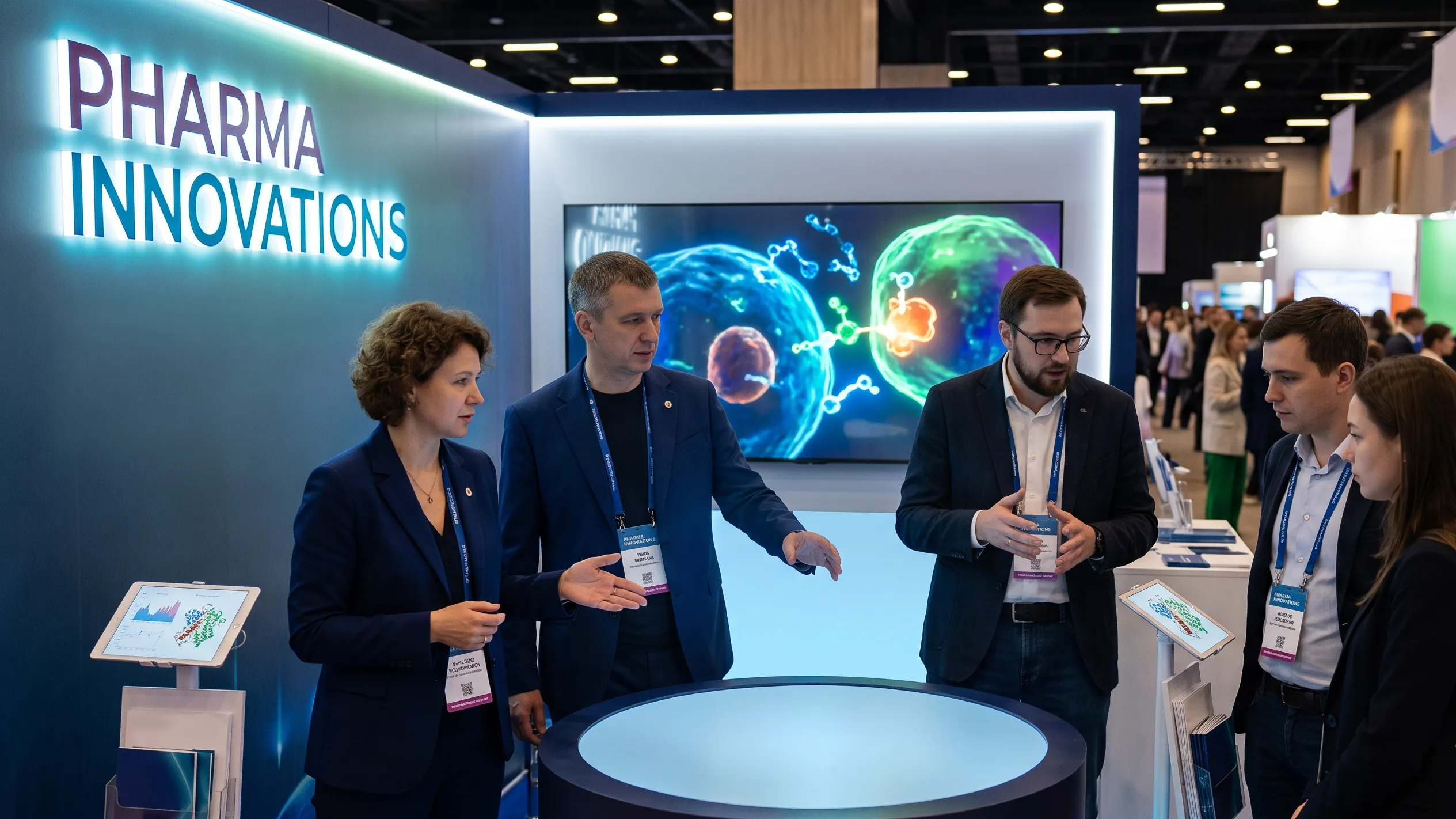
Large-screen booth animations. Exhibition booths are meant to attract attendees in crowded congress halls. Large-scale animated 3D visuals help to catch their attention and communicate key product messages quickly. These assets often serve as visual centerpieces that initiate and support booth discussions and product demonstrations.
Enabling commercial and sales teams
As launch activities are meant to lead to sales, sales teams need tools that help communicate product value consistently and effectively. 3D animation supports these efforts by providing visual content that simplifies scientific discussions and improves message retention. The formats that can help are:
-
Product overview animations. They provide a concise introduction to a medicine's benefits, indications, and differentiating characteristics. Such videos help sales teams establish context quickly and communicate key messages consistently across customer interactions.
-
MoA animations for field presentations. MoA animations remain one of the most effective sales assets because they help healthcare professionals understand exactly how a therapy or medicine works. These videos can significantly improve the quality of scientific discussions during field engagements.
-
Internal training animations. Before launch, commercial teams must develop a strong understanding of the product, competitive landscape, and scientific positioning. Training animations help accelerate onboarding and ensure that sales representatives communicate accurate, consistent information throughout the launch period.
When should pharma teams start animation production?
To effectively fulfill animation’s communication functions, its production must be integrated into broader launch planning. Content development, visual storytelling, medical validation, regulatory review, and stakeholder approvals all require time and coordination. When these activities are not aligned with the launch pipeline, teams often face compressed timelines and missed opportunities to maximize the value of their visualization assets.
"One of the biggest mistakes we see in pharmaceutical launches is treating medical animation as a last-minute marketing asset. The most successful teams start planning visualization content months before launch, giving themselves enough time for scientific review, stakeholder alignment, regulatory feedback, and adaptation across multiple channels. In our experience, early planning leads to stronger, more effective launch communication."

The most successful pharma companies start planning animation production during the pre-launch phase, aligning content development with key commercial, medical, and scientific milestones.
Why starting early matters
3D pharma animations must balance scientific accuracy, regulatory compliance, and strategic messaging. Developing a single animation often involves collaboration between marketing teams, subject experts, regulatory reviewers, and external creative partners.
The production process typically includes:
-
Strategic planning and content scoping;
-
Scientific research;
-
Script development;
-
Storyboarding;
-
3D design and animation production;
-
Medical and regulatory review cycles;
-
Voiceover and localization;
-
Final approval and deployment.
Depending on complexity, a high-quality MoA or scientific animation can take anywhere from 8 to 16 weeks or longer when multiple review rounds are required.
How to maximize your pharmaceutical animation ROI
Creating a pharmaceutical animation requires a significant investment of time, expertise, and budget. However, the companies that achieve the greatest return are rarely those that simply produce the most visually impressive content. They realize that true ROI comes from using the video across the entire product lifecycle — from pre-clinical phases to deploying those same assets for commercial sales enablement.
The highest-performing pharma launch campaigns consider animation as a strategic asset rather than a one-off solution. In doing so, they adopt the following practices.
Involving medical, marketing, and regulatory teams early
One of the most important things is to bring key people into the project from the beginning.
Many animation projects encounter delays when medical, marketing, and regulatory teams review content only after scripts, storyboards, and 3D models have already been developed. This often leads to revisions, approval bottlenecks, and additional production costs.
On the other hand, adopting a cross-functional planning process helps ensure that:
-
Scientific content is accurate from the very beginning
-
Commercial objectives are clearly defined
-
Regulatory requirements are incorporated early

Early collaboration not only reduces rework but also allows for creating animation assets that are more effective in supporting launch objectives.
Repurposing animation across launch channels
A single animation project can often support medical education, congress presentations, sales enablement, digital marketing, investor communications, and internal training programs.
For example, a comprehensive MoA animation can be repurposed into:
-
Short congress presentation segments;
-
Sales force training modules;
-
Website and landing page content;
-
Social media clips;
-
Internal educational resources.
This approach significantly increases content lifespan while reducing the need to create new assets for every campaign or audience.
Before production begins, launch teams should identify all potential deployment channels and design the animation with future adaptations in mind.
Partnering with a specialized medical animation agency
Not every animation studio has the expertise required for pharmaceutical communications.
Product launches often involve complex science, strict regulatory considerations, and multiple stakeholder groups with different needs. Working with a specialized medical animation agency can help ensure that content is both scientifically accurate and strategically aligned with launch goals.
An experienced healthcare-focused partner can contribute value beyond animation production by helping teams:
-
Translate complex science into clear visual narratives;
-
Create assets tailored to different audiences;
-
Navigate medical review processes;
-
Build scalable content systems that support multiple launch activities.
Most importantly, specialized agencies understand how pharmaceutical companies use animation throughout the launch journey, from disease awareness and KOL engagement to congress communications and commercial deployment.
As a result, pharmaceutical teams can often generate greater long-term value from a single animation investment while reducing production risk and accelerating time to launch.
How to choose the right medical animation agency
Choosing the right animation partner can have a significant impact on the success of your launch communications. While many digital agencies and production studios can create visually attractive content, pharmaceutical product launches require a combination of scientific expertise, regulatory awareness, and advanced 3D visualization capabilities.
General creative agencies often lack the medical knowledge needed to accurately represent complex biological processes, therapeutic mechanisms, and clinical concepts. As a result, pharmaceutical companies should carefully evaluate whether a potential partner can support both scientific accuracy and commercial objectives.
Generalist vs. specialized studios
For pharmaceutical companies, the ideal partner should understand the scientific, commercial, and regulatory specifics of bringing a therapy to market and be able to translate complex science into assets that support launch success.
Secure your next pharma product launch with VOKA
3D animation gives pharmaceutical companies a practical way to explain mechanisms, educate stakeholders, and create consistent messaging across launch activities.
If your team is preparing for an upcoming product launch, it may be worth evaluating where visual communication can strengthen understanding and engagement.
At VOKA, we create scientifically accurate 3D animations for pharma and biotech companies. Contact us to discuss how we can help your team translate complex data into compelling visual stories.
FAQ
1. When should pharma companies start developing launch animations?
Ideally, animation planning should begin during the pre-launch phase. High-quality scientific animations often require 8–16 weeks or more for research, scripting, medical review, production, and approval sessions. Starting early ensures assets are ready for key launch milestones such as KOL education, congresses, and sales training.
2. What types of pharmaceutical animations are most commonly used during launches?
The most common formats include MoA and MoD animations, physiology visualizations, scientific explainer videos, and product overview content.
3. Can your animations be used across multiple launch activities?
Yes. A single animation can often be repurposed for medical education programs, congress presentations, sales enablement, digital campaigns, investor communications, and internal training.
4. What should pharma companies look for in a medical animation agency?
The ideal partner should combine scientific expertise, regulatory awareness, and advanced 3D visualization capabilities. Agencies specializing in healthcare and life sciences are typically better equipped to create scientifically accurate content that supports both medical and commercial launch objectives.
Make VOKA your preferred source
See more VOKA articles in Google Search

Share
Table of contents
Thank you for your comment!
Your comment has been submitted for moderation and will be published soon. We'll email you once it’s live.