

3D cell structure animation: making complex biology clear for pharma research and drug development

Share:

Copy link

Share via Telegram

Share on Facebook

Share on LinkedIn

Share via WhatsApp

Share on X

Share via Email
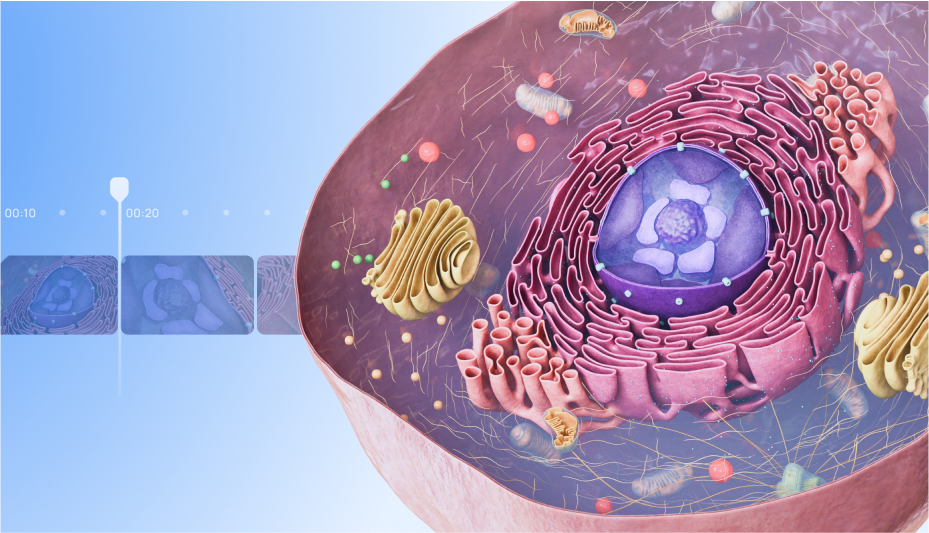
Table of contents
A new therapy starts with something incredibly small: a molecule interacting with a single cell. The problem is that nobody can see it happen. And that makes life harder for pharma and biotech teams.
Researchers need to understand complex cellular mechanisms. Investors want to see why a drug candidate is worth backing. Healthcare professionals (HCPs) ask for a simple explanation of how a therapy works.
A few bullet points or a static diagram rarely do the job.
But 3D cell structure animation can fill that gap by showing microscopic processes as they happen.
In this article, we’ll explain why you should think about creating such videos if you want to align all your stakeholders around the same scientific story.
Key takeaways
1.
Understanding cell structure is the first step toward developing more targeted therapies.
2.
3D cell structure animation makes complex mechanisms of action (MoA), drug interactions, and disease progression easier to understand.
3.
Custom animations help researchers, HCPs, investors, and commercial teams stay aligned around the same scientific story.
4.
Scientifically accurate 3D assets outperform generic stock animations in pharma communication and fundraising.
5.
One high-quality animation can support R&D, investor pitches, medical affairs, sales enablement, and patient education.
Why is understanding cell structure important for drug development?
Every drug eventually comes down to one question: what happens inside the cell after the drug molecule gets there? If you can't answer that, it's much harder to convince investors and HCPs that your therapy is worth attention.
At this point, cell biology becomes the foundation of target validation, drug discovery, and scientific communication.
Below are the cellular structures that matter most in modern pharma R&D and why teams spend so much time studying them.
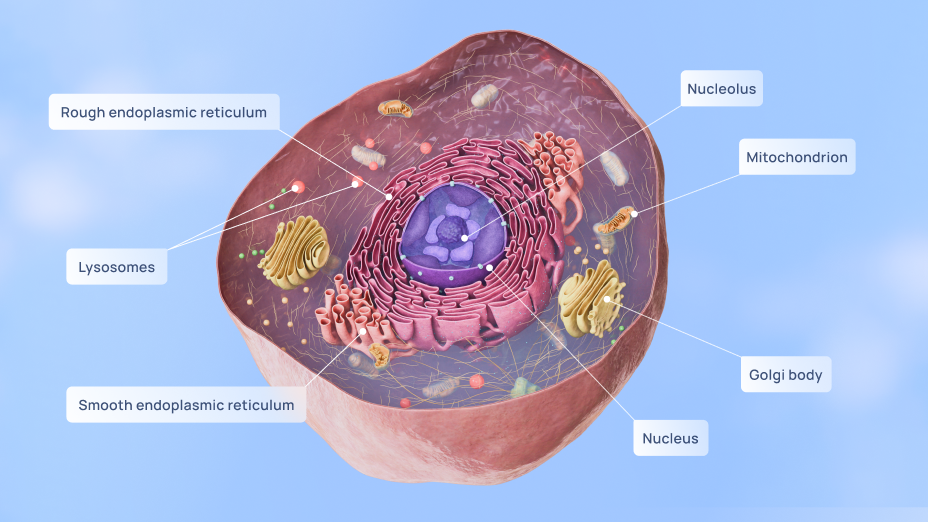
The cell membrane: gatekeeper and drug target
Every drug has to get through the cell membrane or interact with something on it. That's why it's one of the first places researchers look.
The membrane controls what enters and leaves the cell, while membrane proteins often serve as drug targets themselves.
Understanding how molecules cross this barrier helps researchers predict drug absorption, intracellular transport, and even resistance mechanisms before clinical trials begin.
Mitochondria: energy and early warning signals
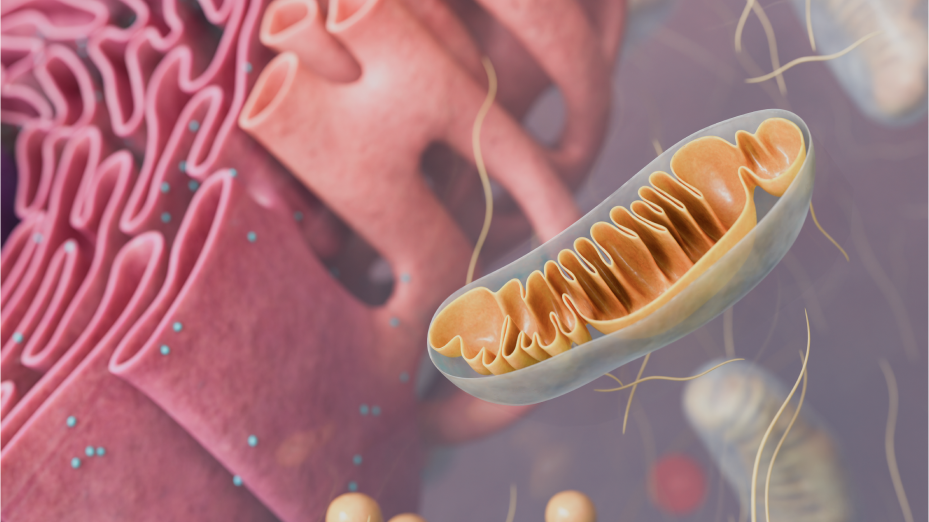
Mitochondria do far more than produce energy. They regulate metabolism, trigger programmed cell death (apoptosis), and respond to cellular stress.
When a new compound disrupts these processes, it can signal potential toxicity or unexpected side effects.
That's why mitochondrial function is routinely evaluated during early drug development, especially for therapies targeting cancer, metabolic diseases, and neurodegenerative disorders.
The endoplasmic reticulum: the critical role of protein folding
The endoplasmic reticulum is where proteins are built and folded. When that process goes wrong, cells experience stress – a hallmark of diseases like cystic fibrosis, diabetes, and many cancers.
For drug developers, the endoplasmic reticulum offers valuable insight into how therapies affect protein synthesis, calcium balance, and other pathways that are increasingly targeted by modern biologics.
The nucleus: command center for genetic targets
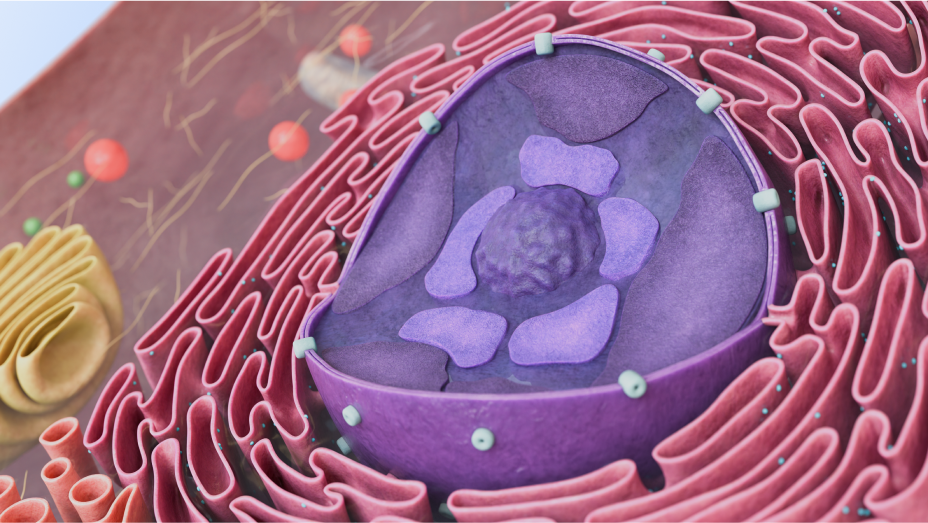
The nucleus contains DNA and coordinates gene expression. Many modern drugs, including gene therapies and cancer treatments, target this control hub.
Gene therapies, oncology drugs, and RNA-based treatments all depend on understanding what happens inside the nucleus.
The better researchers understand these genetic processes, the easier it becomes to design.
Cytoskeleton: not just for structure
The cytoskeleton gives cells their shape, but that's only part of the story. It also controls movement, intracellular transport, and cell division.
These processes are especially important in diseases like cancer, where uncontrolled cell division and migration drive tumor growth and metastasis.
Studying cytoskeletal dynamics helps researchers evaluate new therapeutic targets and understand how drug candidates may influence disease progression.
Key obstacles in pharma research & drug development

Drug development is full of unknowns. Even after years of research, promising compounds can fail because biology is more complicated than anyone expected.
Let’s discuss three obstacles pharma teams deal with along the way. Because when you know the risks, you can better prepare for them.
Complications during preclinical and clinical stages
Drug discovery is a numbers game, and the odds aren't great. According to BIO's Clinical Development Success Rates report, only 7.9% of drugs entering Phase I eventually reach approval.
Why? It's incredibly difficult to predict how a molecule will behave inside living cells. Without a clear understanding of cellular interactions, promising results in the lab don't always provide successful clinical outcomes.
Validation of molecular targets in drug development
Finding a promising target is one thing. Proving it's the right one is much harder. A protein or receptor may look like an ideal target in cell cultures or animal models, only to behave very differently in humans.
So what's at stake? About 90% of clinical drug development fails because promising targets turn into expensive dead ends long before a therapy reaches patients.
Communication gaps across research teams
Modern drug development brings together biologists, chemists, pharmacologists, clinicians, and data scientists. They all look at the same project but often through completely different lenses.
When complex cellular mechanisms are explained only with papers or charts, misunderstandings become almost inevitable. As a result, teams spend more time aligning, and the project faces costly delays.
How medical animation enhances cell structure, pharma research & drug development
Pharma teams don't just need better data. They need better ways to explain it.
If you make 3D animations part of your marketing strategy, you're investing in an asset that can support investor pitches, medical affairs, sales enablement, and patient education.
When people understand the science faster, they make decisions faster too, which improves sales and marketing ROI.
Now, let’s discuss how animations can help you achieve your goals.
Speed up R&D decisions
A drug doesn't fail only because the molecule is wrong. Sometimes the cell simply finds a way around it.
Cancer cells are particularly good at this. They mutate. They change membrane permeability. They switch signaling pathways. A therapy that looked promising suddenly loses its effect.
The problem? These changes are happening at a scale researchers can't directly see. And explaining them through papers, charts, or a few PowerPoint slides leaves too much room for interpretation.
Much easier to show it.
A cell structure 3D animation lets people watch the whole process unfold: how a molecule reaches the receptor, what happens after binding, and where resistance begins.
With a clearer view of cellular interactions, teams can discuss potential weak points earlier and make better decisions before moving into costly development stages.
Align researchers, HCPs, and commercial teams
Great science can still get lost in translation.
A researcher, a medical affairs specialist, and a commercial team may all look at the same therapy from completely different angles. One focuses on cellular mechanisms. Another thinks about clinical relevance. A third needs to explain the value clearly to an external audience.
3D animation creates a shared picture. It can show a mechanism of action step by step, visualize how a therapy interacts with cells, and compare healthy physiology with disease progression.
When everyone sees the same scientific story, discussions become faster, and teams can communicate the value of a therapy with much more confidence.
Secure biotech funding with investor pitch presentations
At the Seed or Series A stage, biotech companies often have a promising molecule, but not much that investors can actually see.
A few slides with molecular structures and technical descriptions rarely help someone outside the lab understand the opportunity.
With a 3D cell structure animation, you can show where a therapy works and why the mechanism matters. The idea is no longer abstract. It’s a clear scientific story now.
For biotech teams, this means giving investors, partners, and stakeholders a way to see the potential behind the molecule. Plus, you make the investment opportunity easier to evaluate and support.
Why "off-the-shelf" cell animations don't work for pharma
A quick search will give you plenty of ready-made cell videos. They work well for classrooms, biology lessons, or general education.
But when you’re explaining a new therapy, you’re not just showing what a cell looks like. You need a scientifically accurate story built around your specific molecule, your mechanism, and your audience.
The right choice depends on your goals, as generic and custom animations take very different paths.
A custom animation is not just a more detailed version of a generic video. It is built around a specific scientific question: what exactly do you need your audience to understand?
This is where specialized 3D animation services make a difference. At VOKA, we turn complex cellular and molecular processes into clear visual stories that support R&D communication, fundraising, medical affairs, and commercial strategies.
As one of the experienced pharma video production companies, VOKA combines visual expertise with medical validation. Every 3D asset is reviewed by our in-house medical experts to ensure accuracy and consistency with the underlying biology.
Final thoughts
Cell structure interactive animation is quickly becoming part of the wider biotech and biopharma industry trends shaping how companies communicate science.
The reason is simple: modern therapies are becoming more complex, and explaining them with static slides is getting harder.
A well-designed animation can show what happens inside a cell and why a treatment approach matters, all in a way that different audiences can understand.
For researchers, this means clearer insights and better collaboration. For investors – seeing the potential behind a molecule before clinical success is achieved. And for pharma teams – having an accurate asset that supports communication across R&D and commercial activities.
FAQ
1. Why is 3D cell structure animation important for biotech?
3D cell animation helps biotech teams explain complex science in a way people can quickly understand. It can support research discussions, investor pitches, and medical communication.
2. What is the difference between educational cell models and pharma animations?
Educational models show how cells work in general. Pharma animations focus on a specific therapy, mechanism of action (MoA), or research goal and require scientific accuracy.
3. How does medical animation help in drug development?
Drug development involves many complex decisions. Medical animation helps teams visualize drug interactions, disease mechanisms, and potential treatment effects. By making these processes easier to understand, animations can improve collaboration, support earlier decision-making, and help different teams work from the same scientific picture.
4. Can 3D animation show cell membrane interactions?
Yes. 3D animation can visualize processes like receptor binding, drug delivery, and cellular resistance at the membrane level.
Make VOKA your preferred source
See more VOKA articles in Google Search

Share
Table of contents

Thank you for your comment!
Your comment has been submitted for moderation and will be published soon. We'll email you once it’s live.