

VR rehabilitation in healthcare: clinical mechanisms, challenges, and best practices

Share:

Copy link

Share via Telegram

Share on Facebook

Share on LinkedIn

Share via WhatsApp

Share on X

Share via Email
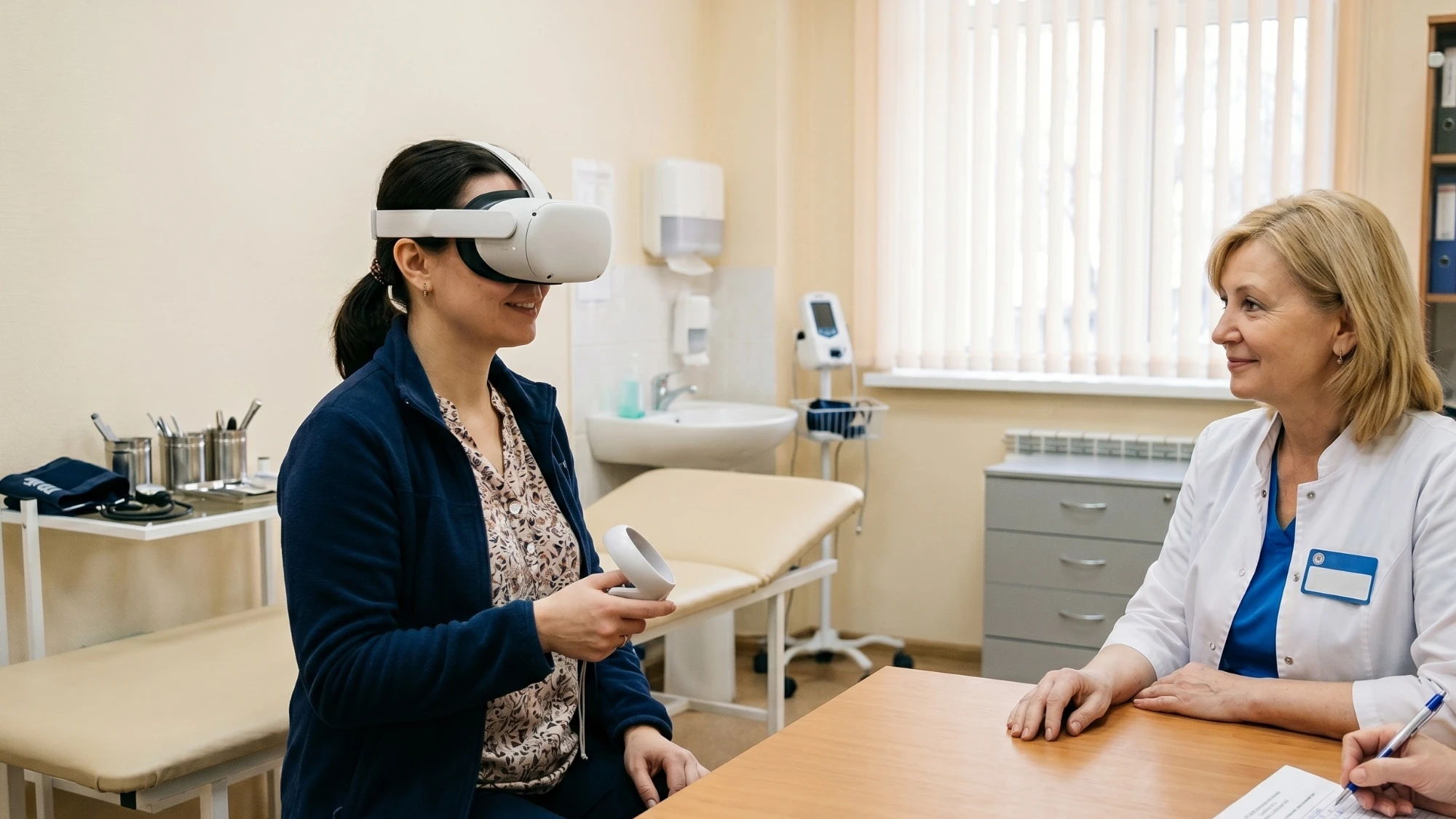
Table of contents
Rehabilitation is rarely a quick process. Patients need weeks or even months of repetitive training, while healthcare providers must balance clinical outcomes and resource limitations.
Virtual reality (VR) changes how rehabilitation is delivered. It combines immersive environments, real-time feedback, and objective progress tracking, which makes therapy engaging for patients and easier to monitor for clinicians.
In this article, the VOKA experts explain how VR rehabilitation works, where it delivers the greatest clinical value, and what challenges organizations should expect. Plus, we share how healthcare networks can successfully implement it in practice.
Why is VR rehabilitation important for modern healthcare
Traditional rehabilitation programs often require extensive one-on-one supervision, repetitive exercises, and frequent progress assessments. VR rehabilitation addresses these pain points.
For clinics, insurers, and medical investors, the benefits of VR in the healthcare industry is defined by several core pillars.
1. Resource optimization and cost reduction
In traditional clinical settings, therapeutic revenue is defined by a therapist-to-patient approach. It means that the clinic’s capabilities are limited by the number of specialists available. VR technology changes the situation.
-
Multi-patient availability. With a VR solution, multiple patients can go through the same therapeutic program simultaneously or whenever it suits them.
-
Equipment downsizing. High-end robotic trainers and mobilization beds require massive investments and occupy valuable space. Portable VR setups achieve the same outcomes at a far lower cost.
2. Geographical expansion
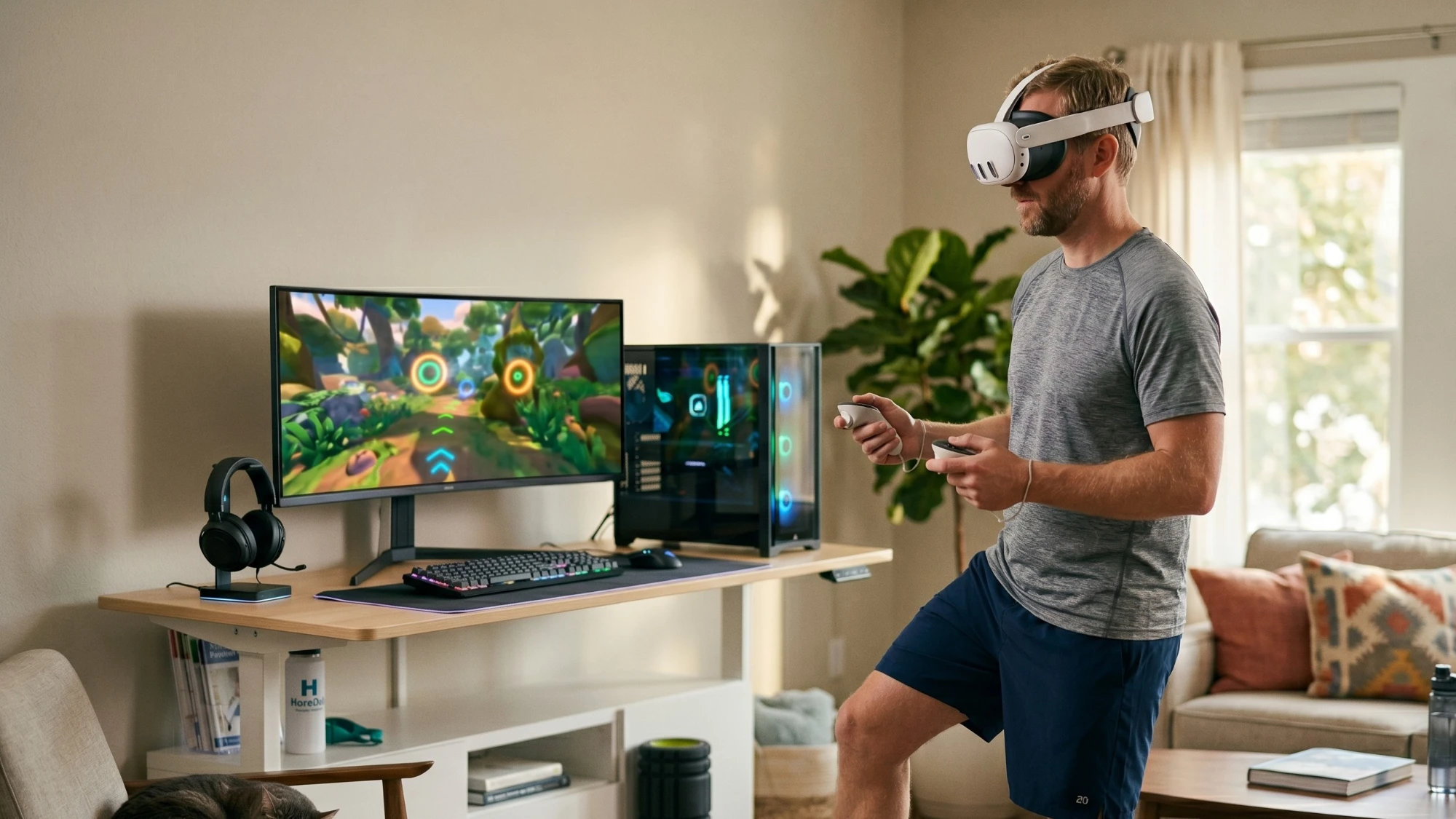
Traditional rehabilitation requires patients to travel to a clinic for regular therapy sessions, which can limit access to care. On the other hand, VR rehabilitation enables certain exercises and assessments to be completed remotely. In some cases, clinics can provide patients with pre-configured VR devices, allowing them to continue therapy from home while specialists can track their progress and recovery remotely.
3. Automated data-driven care
The healthcare industry heavily relies on objective validation. VR allows for embedding continuous biometric tracking directly into the treatment process. For example, the system can automatically log joint ranges of motion, multi-axis velocity, reaction times, and cognitive processing errors. Therapists receive the data and gain a clear, measurable view of patient performance and recovery.
4. Strengthening treatment cost justification
VR adoption offers streamlined reimbursement. The automated digital progress charts provide insurers and patients with the data required to justify treatment costs. As a result, it reduces claims denials and administrative friction.
5. Improving patient engagement through gamification
One of the key challenges in rehabilitation is maintaining patient motivation throughout the treatment journey. Traditional exercises are often monotonous and associated with physical discomfort.
VR adds interactive and immersive elements to rehabilitation exercises, making therapy sessions more engaging for patients. This enhanced experience can motivate and encourage continued participation in the rehabilitation program. Patient acceptance of the technology also appears to be high, with some reports indicating that 62% of patients would prefer VR-based care over traditional healthcare approaches in certain contexts. As a result, HCPs can improve adherence to prescribed treatment plans and support more consistent participation in therapy.
The science behind virtual reality rehabilitation
Growing evidence proves the effectiveness of VR rehabilitation in numerous therapeutic scenarios.
For example, a systematic review found that one of the key mechanisms behind VR rehabilitation is movement visualization – the way a patient's actions are represented within the virtual environment. By providing real-time visual feedback, VR creates a continuous perception-action loop that allows patients to monitor their performance. Combined with high training volumes, this feedback-rich environment can strengthen motor learning and support rehabilitation outcomes.
Beyond behavioral improvements, research indicates that VR may also facilitate neuroplasticity, the brain's ability to reorganize itself in response to training and experience. Studies reported several neurophysiological changes following VR interventions. They include:
-
Improved interhemispheric balance;
-
Enhanced cortical connectivity;
-
Expanded cortical representation of affected muscles;
-
Increased activation of brain regions involved in motor control, attention, and executive functioning.
Finally, a scoping review of dedicated studies found that VR-based stroke rehabilitation can improve dynamic balance, gait speed and quality, and the ability to navigate real-world environments. These outcomes are likely driven by intensive task-specific practice, multisensory feedback, increased patient engagement, and the opportunity to safely train in realistic scenarios that are difficult to replicate in traditional rehabilitation settings.
Taken together, the evidence suggests that VR can help patients improve movement quality, develop functional skills, and support recovery across a range of neurological and rehabilitation conditions.
Key clinical applications in physical therapy and neurorehabilitation
There are dozens of examples of how VR is used in healthcare, ranging from surgical pre-planning to acute pain management. However, VR rehabilitation is used across multiple clinical specialties, particularly in physical therapy, neurological recovery, and cognitive rehabilitation. The following examples highlight some of the most promising applications.
Stroke rehabilitation and brain injuries
When a person suffers a stroke or a traumatic brain injury, the damage usually affects the neurological pathways. Here is exactly how VR transforms the recovery process.
Supercharging neuroplasticity
Neuroplasticity is the brain's ability to reroute signals around damaged areas and build new pathways. It requires thousands of repetitive actions and intense focus to kick in.
The traditional therapy, when the patient is required to move an object hundreds of times, is exhausting and quickly leads to mental fatigue. As a result, the brain is unable to focus, and the recovery is compromised.
VR-based exercises can make repetitive rehabilitation tasks more engaging by turning them into goal-oriented activities. Instead of performing the same movement repeatedly in a clinical setting, patients may be asked to follow moving targets or complete simple functional tasks. This approach maintains motivation and encourages participation throughout the rehabilitation process.
Providing a safe environment for real-world tasks
Brain injuries often disrupt cognitive functions like spatial awareness, attention, and memory. Relearning how to navigate the world can be dangerous in real life. VR provides a safe simulation where a therapist can monitor progress while a patient practices daily living skills. For example, they can practice making a cup of tea or organizing a shelf without risking burns or dropping heavy objects. Patients can also practice street crossing without any real-world traffic danger.
Orthopedic rehabilitation
In orthopedic rehabilitation, VR is primarily used to support:
-
Movement retraining is achieved by encouraging patients to perform therapeutic exercises with proper technique.
-
Weight-shifting exercises that promote balanced loading after injury or surgery.
-
Gait correction by identifying compensatory movement patterns and helping patients develop more symmetrical walking mechanics.
Additionally, VR promotes real-time feedback on movement quality, posture, and exercise performance. For example, after knee surgery, a patient may unconsciously favor the unaffected leg. VR systems can detect these asymmetries and provide immediate visual feedback, helping therapists guide more balanced and efficient movement patterns.
Vestibular rehabilitation
In vestibular rehabilitation, VR is commonly used for:
-
Controlled exposure to environments that may trigger dizziness, imbalance, or visual sensitivity.
-
Simulation of real-world settings, such as supermarkets, train stations, airports, or crowded public spaces.
-
Progressive difficulty exercises, allowing therapists to gradually increase visual complexity and environmental distractions as tolerance improves.
For instance, a patient may begin therapy in a quiet virtual supermarket and progressively advance to busier scenarios with moving crowds, dynamic visual stimuli, and increased environmental motion. This gradual exposure helps patients build tolerance, improve balance and confidence, and better manage symptoms in everyday situations.
Cognitive recovery and ADL
In a standard clinic, a therapist might give a patient a worksheet to practice memory or ask them to sort colored blocks to practice focus. But these traditional exercises may not always reflect real-world complexity. Clinics use VR for cognitive recovery because it can train attention, memory, planning, and spatial orientation in realistic scenarios.
For instance, patients can work with virtual scenarios such as preparing a meal or shopping for groceries. While these tasks may seem routine, they rely on a combination of cognitive abilities, such as:
-
Executive function;
-
Task sequencing;
-
Attention switching;
-
Working memory.
VR enables clinicians to assess and train these skills in realistic yet controlled environments, helping patients regain confidence and independence in daily life.
In cognitive recovery settings, a VR simulation might place a patient in a busy office or a virtual apartment where multiple things happen at once (the doorbell rings, a pot on the stove starts boiling, the phone rings, etc.). The patient must prioritize what to do first, training the brain to filter background noise and manage chaos. These exercises help strengthen attention, decision-making, and executive functioning skills that are essential for independent living, work-related tasks, and everyday problem-solving.
Top challenges of implementing VR in clinical settings
While virtual reality offers vast potential for patient care, making this technology a reliable medical tool is a challenge. Implementing VR in a healthcare environment requires overcoming a mix of physiological, technical, and regulatory obstacles.
Usability challenges: cybersickness & hardware limitations
The first problem is that VR headsets may not be suitable for everyone. One of the key considerations is cybersickness, which can include symptoms such as:
-
Motion discomfort;
-
Nausea;
-
Disorientation;
-
Eye strain.
These effects vary significantly depending on the individual and the specific VR system used.
Hardware limitations also matter. Headsets can be heavy, uncomfortable, or hard to calibrate, and tracking systems may be sensitive to room setup or patient movement. In practice, these issues can reduce session length, adherence, and the number of patients a clinic can realistically serve.
Lack of clinical accuracy
In some rehabilitation scenarios, standard VR systems may not fully capture compensatory movement patterns. For example, a patient with shoulder weakness may compensate by engaging the torso to complete a movement. While a therapist can identify these patterns through direct observation, basic controller-based tracking may only register task completion without reflecting how the movement was actually performed.
Another important consideration is the level of clinical validation behind VR-based rehabilitation software. Clinic executives should understand whether the new software is actually targeting the correct neurological pathway for their stroke patients or is just a fancy, expensive video game with a medical label slapped on it.
Technical limitations
Whether used inside a clinic or sent home with a patient, VR hardware often creates heavy operational friction. The technology requires constant maintenance and a stable environment to function correctly.
Inside the clinic, troubleshooting Wi-Fi or calibrating sensors wastes valuable therapy time.
At the same time, when patients use VR at home, clinic staff must act as remote tech support. Elderly or tech-unfamiliar patients frequently struggle with app updates, controller pairing, and home Wi-Fi issues.
Data security and privacy
A VR headset doesn't just track your clicks. It also constantly records your exact height, hand-eye coordination, head-sway patterns, and even your eye movements (via gaze-tracking). Research has found that just 100 seconds of VR movement data is sufficient to identify a specific person in a crowd of 50,000 with over 94% accuracy.
An additional problem is that most major VR hardware is manufactured by massive consumer tech companies (like Meta or HTC). These devices are designed to sync data to commercial clouds, update via public Internet connections, and track user behavior. Hospital IT departments tend to forbid connecting devices to networks that could accidentally leak patient information, so VR installation can come across security issues.
Best practices for smooth VR adoption in clinical settings
When it comes to VR implementation, the first thing clinics should think of is finding a trusted partner for delivering a solution.
VOKA is proficient in providing medical VR & AR services. We create 3D environments for Meta Quest and Apple Vision Pro based on immersion and gamification. Additionally, our in-house medical experts validate all 3D models and ensure clinical accuracy in all scenarios.
"Consumer games might be fun, but clinical efficacy is impossible without custom real-time kinematic tracking and medically accurate biomechanics. To truly support neurorehabilitation, a platform must provide HIPAA-compliant data tracking and function as a true evidence-based digital therapeutic, not just an arcade simulation."

However, the efficient VR implementation into clinical workflows demands a shift in existing practices, staff mindsets, and patient engagement strategies.
1. Start with a focused clinical use case
Don't try to solve every rehabilitation challenge at once. You should begin with a specific audience (for example, patients with stroke, phantom pain, or vestibular therapy) and set measurable KPIs. It means that you should define what success looks like early on – whether it's increased patient compliance, faster recovery milestones, or higher throughput in the clinic.
2. Prioritize clinical and staff buy-in
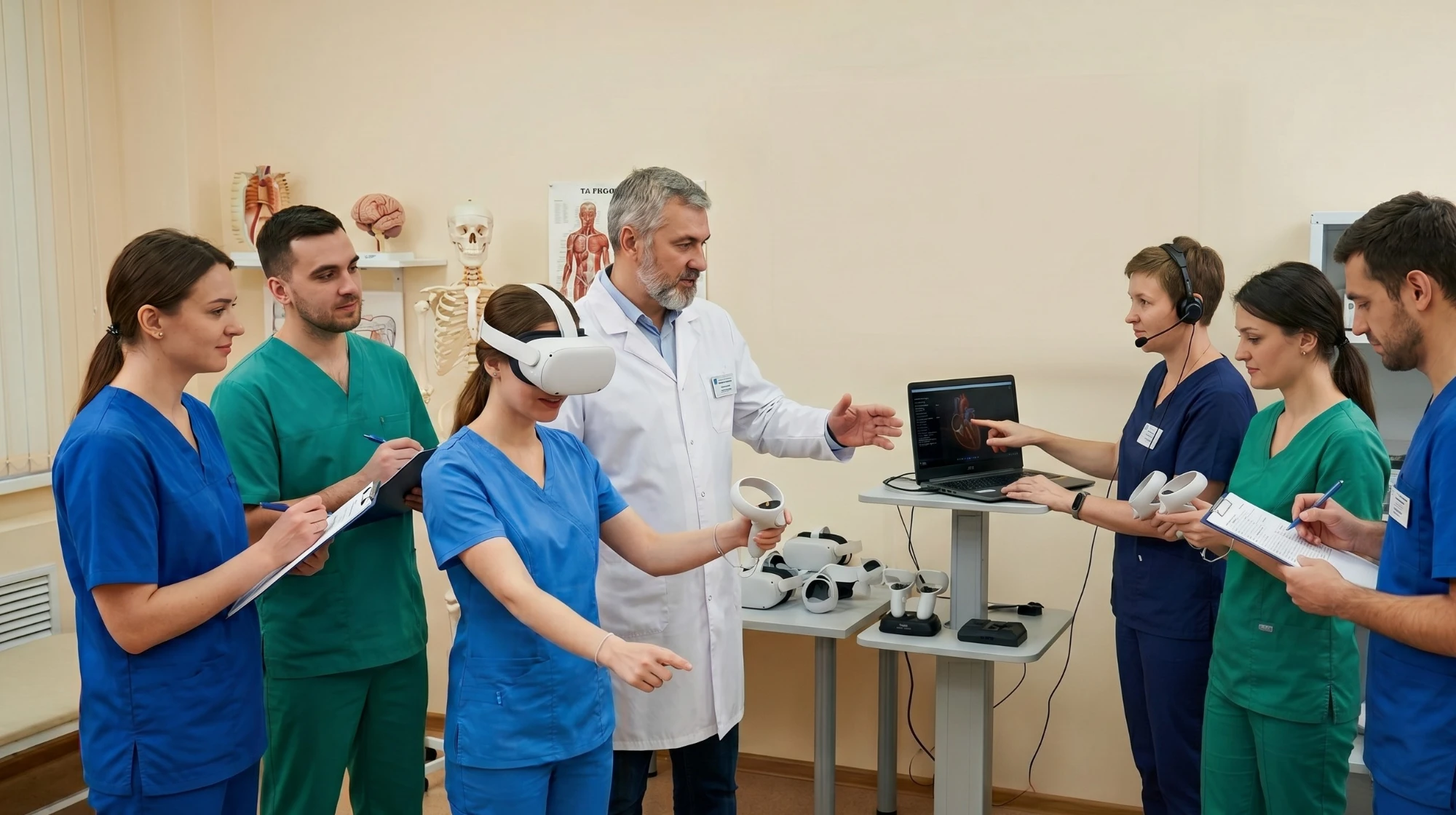
The biggest hurdle to adoption is often resistance from the clinical team, not the technology itself. To solve the problem, you can promote comprehensive training. Provide hands-on training that goes beyond just "how to turn it on". Therapists need to know how to troubleshoot minor issues and seamlessly integrate VR into standard care plans. In fact, utilizing interactive VR simulations for medical students and HCPs during your staff onboarding can significantly accelerate their tech proficiency.
You should also make it clear that VR is a tool to augment their expertise and reduce their workload, not to replace them.
3. Ensure patient safety and comfort
VR can introduce unique physical and psychological challenges that must be proactively managed.
First, you should establish strict, rapid sanitization workflows between patients, like medical-grade UVC disinfection boxes or wipeable silicone face covers.
Second, it is better to implement a screening protocol for conditions like severe epilepsy, cybersickness, or open head wounds.
Finally, you can provide patients with short, low-intensity sessions to build comfort and confidence before moving to complex therapeutic games.
4. Implement a hybrid care model
To maximize ROI and patient outcomes, you should also focus on the rehabilitation process outside the clinic.
Use the clinic to onboard patients and assess their comfort with VR. Once they are proficient, transition them to a prescribed home-based VR program.
You should also ensure your therapists have access to a dashboard to track home adherence and progress asynchronously, adjusting the difficulty levels remotely.
Custom vs "off-the-shelf" VR games
When integrating virtual reality into healthcare, clinics face difficulties. It is a choice between investing in specialized medical software or repurposing commercial, ready-made games. The table below provides a comparison between these two approaches across critical benchmarks.
Both approaches can be useful in rehabilitation, but they are designed for different purposes. Commercial VR games may be used to increase patient engagement or provide immersive experiences at a lower cost.
However, when VR is intended to become part of a clinical workflow, support treatment decisions, and track progress, dedicated medical VR solutions typically offer the functionality and compliance required for healthcare settings.
Conclusion: the future of VR physical therapy
It’s vital to remember that VR-based physical therapy does not replace the hands-on expertise of a skilled clinician. It acts as a powerful tool for scaling care and increasing patient engagement and motivation.
By transforming repetitive exercises into immersive, game-like experiences, VR solves the common problem of patient adherence. It turns exhausting rehabilitation into engaging, rewarding sessions that patients actually look forward to. It also empowers clinicians with real-time, precise motion data, allowing for more objective progress tracking and data-driven adjustments to treatment plans.
Ready to implement clinical-grade immersive technologies? Contact VOKA for custom medical VR development.
FAQ
1. What are the main benefits of virtual reality in rehabilitation?
Virtual reality enhances rehabilitation by increasing patient engagement through a gamified experience. It drives higher repetition and faster recovery and provides a safe, controlled environment to practice real-world tasks.
2. Can VR be used for stroke rehabilitation?
Yes. VR is highly effective for stroke rehabilitation by stimulating neuroplasticity. Immersive simulations trick the brain into moving affected limbs, helping patients regain motor skills, balance, and spatial awareness. It also allows safe practice of daily activities, like reaching or grasping, in a risk-free virtual setting.
3. What data privacy and EHR integration standards must medical VR platforms meet for clinical deployment?
Enterprise-grade medical VR platforms must feature robust end-to-end encryption to comply with HIPAA, GDPR, and localized medical data laws. Unlike consumer hardware, medical VR software is built to integrate with hospital Electronic Health Record (EHR) systems via HL7 or FHIR protocols, ensuring automated, secure data transfer.
4. What is the difference between off-the-shelf VR games and custom medical VR?
Custom medical VR captures precise clinical data, automatically syncs with hospital EMR systems, complies with patient privacy laws, and generates the auditable metrics needed for insurance reimbursement. On the other hand, off-the-shelf VR games offer little actionable health data, lack medical security compliance, and fail to integrate with healthcare software.
Make VOKA your preferred source
See more VOKA articles in Google Search

Share
Table of contents

Thank you for your comment!
Your comment has been submitted for moderation and will be published soon. We'll email you once it’s live.