

Commercializing cell & gene therapies: the communication barrier (and how to overcome it)

Share:

Copy link

Share via Telegram

Share on Facebook

Share on LinkedIn

Share via WhatsApp

Share on X

Share via Email

Table of contents
Cell and gene therapies (CGT) already demonstrate promising results in treating serious conditions, including certain cancers, inherited blood disorders, and rare genetic diseases.
But having effective therapies doesn’t always mean they reach the patients who need them. Even after approval, cell and gene therapies face barriers that slow adoption and limit access.
One barrier is often overlooked: communication. At VOKA, we see how difficult it can be to explain a new CGT clearly to very different audiences without losing the science behind it.
In this article, we’ll look at where that communication gap appears and how scientific visualization can help close it.
Key takeaways
1.
CGT commercialization depends on more than regulatory approval. Physicians, treatment centers, patients, caregivers, and payers need to understand different parts of the treatment journey.
2.
Communication gaps slow CGT adoption and access. Patients may be missed or referred too late, treatment centers may not be ready, and payers may need clearer evidence of long-term value.
3.
Medical visualization makes CGT easier to understand. 3D animation can show mechanisms and cellular processes that are difficult to explain with static images.
4.
The best CGT communication starts early and is built for reuse. A shared scientific foundation supports different audiences, formats, and markets.
But before diving into the communication side, let’s look at what makes cell and gene therapies different in the first place.
Cell therapy vs gene therapy: what’s the difference?
Cell and gene therapies are treatments that target disease at the cellular or genetic level.
The terms may sound similar, but they describe different approaches.
Cell therapy uses living cells to treat a disease. The cells may be taken from the patient or a donor, modified, and then given back to the patient. Cell therapies can be autologous, using the patient’s own cells, or allogeneic, using cells from a donor. CAR-T therapy is one example of cell therapy, with most currently approved CAR-T therapies using the patient’s own cells.
Gene therapy works by delivering, replacing, or editing genetic material to treat a disease. Some approved gene therapies use viral vectors, such as AAV, to deliver a functional gene into the patient’s cells.
Both approaches can target the underlying biology of a disease, but they also create a much more complex treatment pathway than a conventional drug.
How communication gaps slow CGT adoption

Communication is one of the biggest barriers to CGT commercialization because these therapies involve multiple stakeholders, complex treatment pathways, and highly specialized science.
For many traditional medicines, the commercialization path is relatively straightforward: a doctor identifies the condition, prescribes the treatment, and the patient receives it.
Cell and gene therapies require much more coordination.
A patient should be identified as eligible and referred to the right treatment center. The center may require specialized staff, equipment, training, and coordination with manufacturing teams. Payers need to assess the therapy and its long-term value. Patients and caregivers have to understand what the treatment involves and what to expect.
So the journey looks more like: Approval → patient identification → referral → treatment center → manufacturing and supply chain → treatment → reimbursement → follow-up.
Every step involves different people, decisions, logistics, and information needs. That is where commercialization can start to slow down.
And often, the problem is not a lack of information, but a lack of clear, shared understanding.
The communication gap looks different at every stage of the CGT journey. Let’s take a look at what each stakeholder needs to grasp and where things can go wrong.
To understand the bigger picture, let’s discuss each group and their role in communication in more detail.
Referring physicians: recognizing the right patient
Knowing that a new CGT exists is only the first step. Before a patient can reach a treatment center, the physician needs to:
-
Recognize the right patient. Understand the disease, eligibility criteria, and when a patient may benefit from the therapy. For community oncologists, this may be the first step toward identifying a patient who could qualify for CAR-T or another CGT.
-
Understand the treatment. Have a clear picture of how it works and what makes it different from more familiar treatment options.
-
Know when and where to refer. Understand the referral pathway, treatment-center requirements, and what information needs to be provided.
-
Explain the option to the patient. Give patients and caregivers enough context to support informed consent about the treatment.
What’s at stake: A patient may be missed, referred too late, or sent to the wrong treatment center.
Treatment centers: turning approval into site readiness
Getting a therapy approved doesn’t automatically mean a treatment center is ready to deliver it. New CGTs can require specialized staff, equipment, procedures, and coordination between several teams.
Before treating a patient, a center may need to:
-
Understand the treatment process. What happens before, during, and after treatment, and which teams are involved at each stage.
-
Prepare the staff. Make sure physicians, nurses, pharmacists, coordinators, and other specialists understand their roles and the key steps of the treatment.
-
Prepare the site. Ensure the center meets the requirements to become an authorized treatment center (ATC), where applicable.
-
Coordinate the workflow. Align scheduling, patient preparation, manufacturing or delivery, administration, and follow-up.
-
Know what to expect. Understand the practical details that can affect site readiness and patient flow.
What’s at stake: Gaps in understanding can lead to delays, workflow issues, or inconsistent preparation across teams.
Patients and caregivers: understanding what happens next
CGT is difficult to explain to someone who has never encountered this type of treatment before. The science involves modified cell structures, gene delivery, changes happening at the cellular level – concepts that you can’t picture from a single brochure.
Patients and caregivers need a clear explanation of:
-
What the treatment actually does. What is changed or introduced in the body and how it is expected to help.
-
What the treatment involves. What happens before, during, and after treatment, including any preparation and waiting periods.
-
What to expect afterward. How the patient will be monitored and what follow-up may look like.
-
Why the treatment is worth considering. Understand the potential benefits and limitations well enough to have an informed conversation with the healthcare team.
What’s at stake: Confusion about the treatment can make it harder for patients and caregivers to make informed decisions or know what to expect.
Payers: grasping the long-term value
For payers, understanding a new CGT goes beyond its clinical outcomes. They also need to assess what the therapy could mean for the healthcare system over time: from treatment costs and hospitalizations to resource use, patient outcomes, and long-term care needs.
To make that assessment, payers may need to know:
-
The clinical value. How the therapy affects patient outcomes compared with existing treatment options.
-
The economic impact. What it could mean for treatment costs, hospitalizations, follow-up care, and other healthcare resources.
-
The long-term outcomes. How benefits may develop over time and affect the patient’s broader care journey.
-
The wider system impact. How introducing the therapy could change treatment pathways, resource requirements, and healthcare delivery.
-
The reimbursement case. Depending on the market, this may include evidence for health technology assessment (HTA) and reimbursement decisions.
What’s at stake: If the value is unclear, payers may restrict coverage, increase prior authorization requirements, or limit which patients qualify.
Internal teams: keeping everyone on the same page
A CGT launch involves more than one team. Commercial, medical affairs, marketing, and training teams all need to communicate the same therapy, but each one has a different audience and goal.
Each team should:
-
Understand the core science. Have a consistent idea of the therapy, its mechanism, and key clinical points.
-
Adapt the message. Know which parts of the story matter for HCPs, patients, payers, or commercial teams.
-
Use consistent visuals. Work from the same approved scientific foundation rather than creating new explanations from scratch.
-
Keep materials aligned. Make sure presentations, training materials, animations, and other assets tell the same story.
When every team creates its own version, inconsistencies can creep in. The mechanism may be simplified differently, visuals may not match, and teams can end up spending time reviewing and correcting materials that explain the same thing.
What’s at stake: Inconsistent messaging confuses audiences, creates extra review cycles, and slows down the launch.
Medical animation: one tool for many CGT challenges
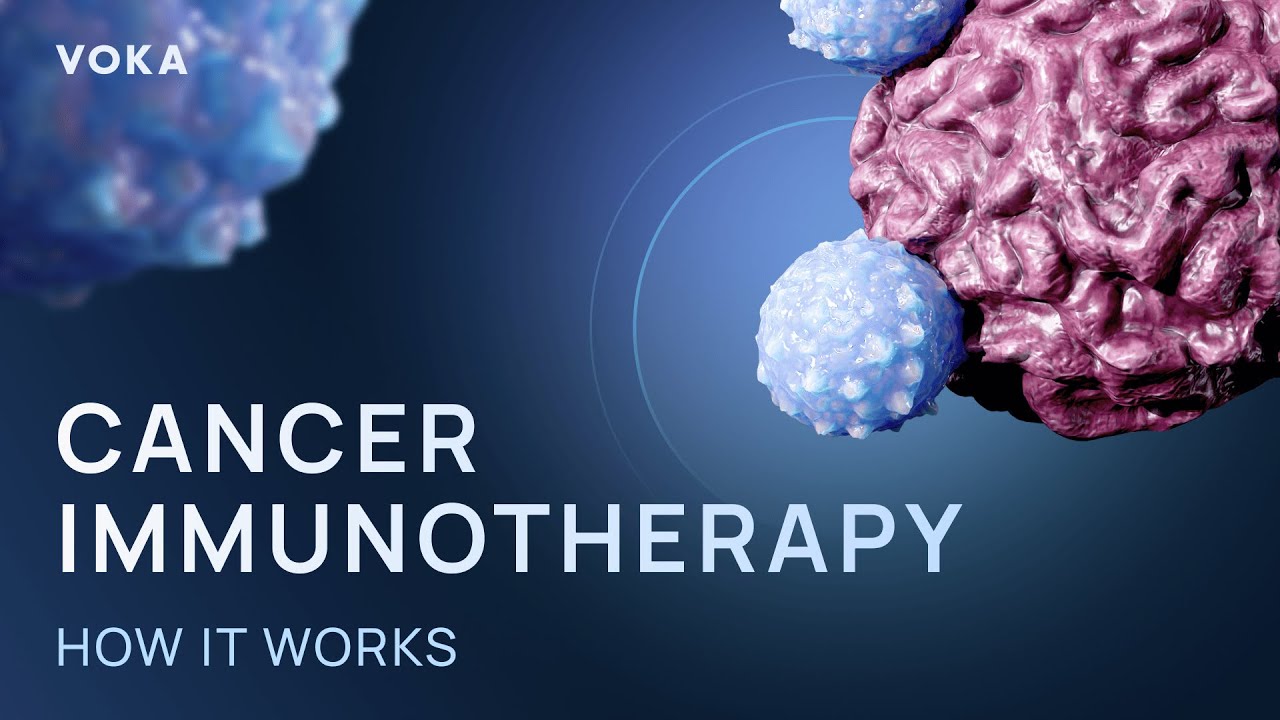
The challenges we’ve just covered may look very different. But they all come down to the same thing – helping people understand a complex therapy.
In fact, medical animation does a lot of the heavy lifting here, as it can address very different communication needs.
We know it may sound like a big claim, but this is something we see in our work with healthcare and biotech companies. The trick is choosing the right format for the right audience.
In our experience, the strongest CGT projects rarely rely on just one type of animation. Different formats can blend to tell the full story.
Say, the video starts by showing how the disease develops, moves into the therapy’s mechanism of action, and then shows how the treatment is delivered with medical devices. Instead of explaining each part separately, you give the audience one complete picture.
Practical tip from VOKA: If you want to combine 3D animation with patient testimonials or footage from a real treatment center, consider full-cycle healthcare video production. The real footage adds context and a human perspective, while 3D can show the invisible science and treatment processes that a camera simply can’t capture.
Why 3D animation works well for CGT communication
-
It saves time. A busy physician or patient doesn’t have time for a crash course in molecular biology. A good animation can show the key mechanism in a few minutes instead of making someone piece it together from a dozen slides.
-
It makes science easier to picture. Modified cells, gene delivery, and processes happening inside the body are hard to imagine from words alone, especially for a non-expert audience. Seeing them on screen provides something concrete to follow.
-
It gives everyone the same starting point. Physicians, treatment-center staff, patients, and payers all need different levels of detail. The core story, however, should stay the same. One visual foundation makes it much easier to adapt the message for each audience.
-
It allows you to get more out of one production. A 3D video doesn’t have to live as a single long-form asset. The same models and scenes can be turned into short clips, stills, training materials, interactive content, and audience-specific versions.
How to build a CGT communication strategy

Now that we’ve looked at where communication can break down and how visualization can help, let’s turn that into a practical plan. Here’s the approach we usually recommend when building communication around a complex therapy.
1. Start with the audiences
First, list everyone who needs to understand the therapy.
Physicians, treatment-center staff, patients, caregivers, payers, medical affairs, commercial teams – they all look at the same therapy from a different angle.
For each audience, define what they need to understand, what decision they need to make, and where they are most likely to get stuck.
2. Build one core scientific story
Before creating different materials for different audiences, agree on the core scientific message.
Define how the therapy works, what makes it different, and which scientific points need to stay consistent across all communications.
This gives every team the same foundation to work from. The message can then be simplified, expanded, or repackaged for different audiences without changing the science.
3. Adapt the story to each audience
Once you have the core scientific message, decide what each audience actually needs from it. Don’t give everyone the full version.
For example, an HCP may need the mechanism and clinical context, while a patient may only need to understand what happens in the body and what the treatment involves. A payer may need more detail on outcomes, durability, and long-term value.
So, keep the same scientific foundation, then create audience-specific versions by changing the level of detail, terminology, visuals, and key takeaways.
4. Choose the right visual approach
Once you know what each audience needs to understand, break the communication task down into the things you actually need to show.
Do you need to make an invisible biological process visible? Show how a treatment is delivered? Put the therapy into a real clinical context? Or tell a patient story?
“The best format doesn’t always mean one format. A single CGT video can combine MoA animation, device visualization, and live-action to explain a different part of the story. The goal is not to pick one format. It’s to make sure every part of the story is shown in the clearest way possible.”

5. Build reusable visual assets
Don’t treat the main video as a one-off piece of content.
When planning production, identify which 3D models, animations, scenes, and graphics can be reused later.
For example, one set of approved assets can be turned into:
-
short social or campaign videos;
-
still images for presentations and websites;
-
visuals for sales and training materials;
-
conference and event content;
-
patient- or HCP-specific versions;
-
interactive or educational materials.
This gives you a visual library that can support the CGT launch across different channels and audiences, instead of creating every new asset from scratch.
6. Consider review and adaptation from the start
Map out the review process before production begins.
Decide which claims, visuals, and scientific details need medical, legal, or regulatory (MLR) review, and build them into the workflow from the start.
Also think ahead about what may need to change later. A CGT campaign may need new language versions, market-specific claims, updated data, or materials for a different audience.
The practical goal is simple: create content that can be reviewed once and adapted many times, instead of sending every new version through the entire process from scratch.
7. Plan where and when the content will be used
Creating the right content is only half the job. You also need to decide where your audiences will actually see it.
Map out the key channels and touchpoints: congresses, HCP meetings, treatment-center training, sales presentations, websites, patient education, social media, and internal platforms.
Then define which content belongs where and whether it needs a different version for that channel.
Why? This helps you avoid creating a great video that has nowhere to go – or realizing too late that one asset needs five different versions.
8. Measure whether the communication is working
Don’t judge a CGT communication campaign by views alone. Look at whether the content is helping people make the decisions they need to make.
In practice, track a mix of content, engagement, and outcome metrics:
-
Content performance: views, completion rate, watch time, click-through rate, and downloads. These show whether people are actually consuming the content.
-
Audience response: questions, feedback, and points where people stop watching or ask for clarification. These can reveal what is still unclear.
-
HCP engagement: changes in referrals, requests for more information, training completion, or confidence in identifying eligible patients.
-
Treatment-center readiness: training completion, time to site readiness, and recurring questions during onboarding.
-
Patient communication: engagement with educational materials, comprehension feedback, and the questions patients bring to consultations.
-
Payer communication: recurring objections, requests for additional evidence, and how often the same value questions come up.
Look at these metrics before and after key communication activities, rather than waiting until the end of the launch.
The main idea: measure whether communication changes behavior or removes a real barrier, not just whether someone watched the video.
Common mistake: starting CGT communication too late
One pattern we see quite often is that teams start working on communication only when the therapy is already close to launch.
The mistake is treating communication as a launch announcement: the product gets approved, the launch date is set, and suddenly it’s time to tell everyone about it.
But communication can start much earlier. A simple way to think about the timeline:
-
Before regulatory approval: build understanding around the disease, science, and treatment approach.
-
Once the therapy is approved: introduce the therapy, its mechanism, and what makes it different, where permitted.
-
Before and during launch: adapt the core story into materials for HCPs, patients, treatment centers, payers, and other audiences.
-
After launch: keep the content working through training, education, updates, and new audience-specific materials.
Note: The exact timing depends on the therapy, market, and regulatory restrictions.
But the key is to build understanding before you need people to take action.
What to look for in a CGT communication partner
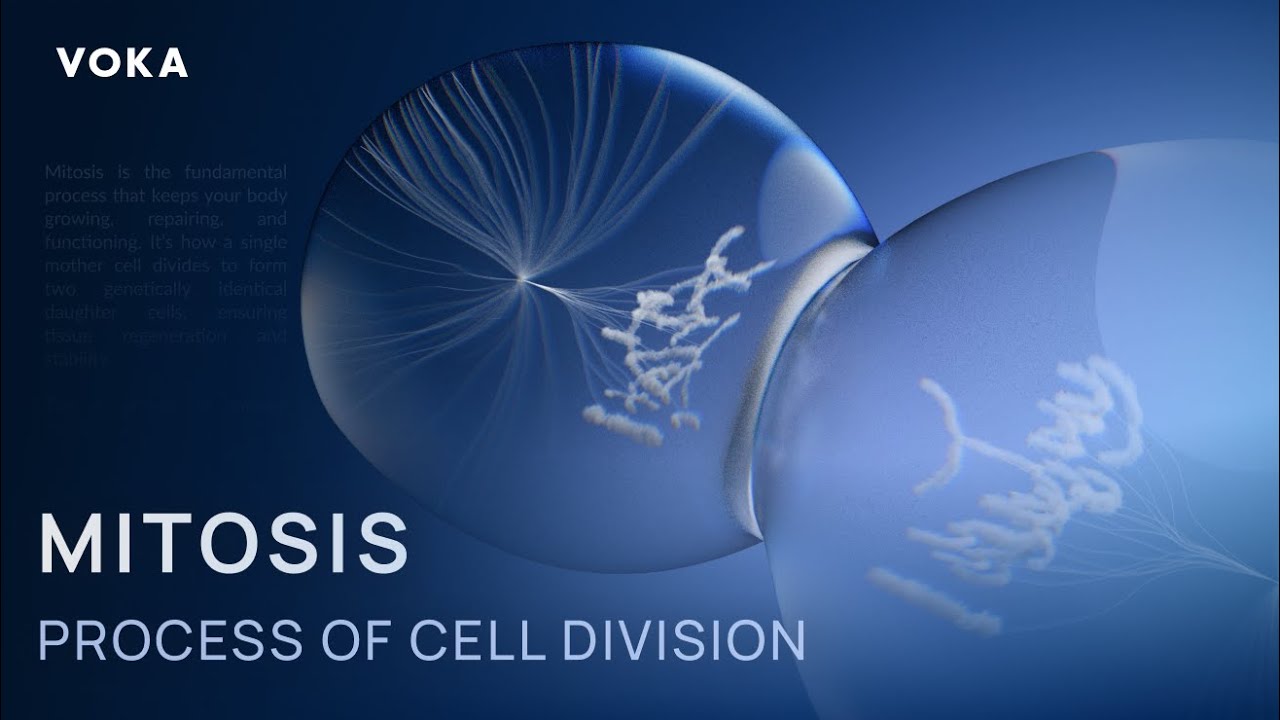
CGT projects sit at the intersection of science, medicine, regulation, and production. That’s why the production partner needs to be comfortable working across all of them.
So, having the right team behind the project can save you a lot of back-and-forth.
A few things can make the process much easier:
-
Medical expertise in-house. For complex CGT topics, you need more than a good animation team. VOKA has an in-house team of physicians and medical experts who can check the science throughout the project. You don't have to find a separate medical reviewer every time a scientific detail comes up.
-
Experience with microanatomy visualization. CGT requires explanations at the level of cells, tissues, gene delivery, and cellular interactions. Look for a partner whose portfolio already includes this kind of work. It’s a sign that they can spend less time figuring out how to represent the science and more time focusing on your therapy.
-
One team for different visual needs. Your project may need a mechanism animation, disease visualization, device content, training materials, or something more patient-friendly. Having all of these capabilities in one team means less coordination on your side.
-
3D and live-action, when needed. Sometimes you need to show what happens inside the body. Sometimes you need to show a real treatment center, a device, or a patient who has been through the treatment. At VOKA, we can combine 3D medical animation with healthcare video production.
-
Experience with regulated communication. Medical accuracy is only part of the job. The team also needs to be comfortable with reviews, approvals, claims, and the many small changes that tend to happen along the way. Experience with pharma and healthcare projects makes this process much smoother.
If you’d rather not spend your time connecting five different teams just to get one piece of communication out the door, we’d be happy to help. The VOKA team brings the different parts of the project together in one workflow.
Get in touch with us to discuss your CGT communication needs.
Wrapping up
Cell and gene therapies can change how serious diseases are treated, but getting a new therapy to the patients who need it takes more than regulatory approval. People across the treatment journey need to understand what the therapy does, why it matters, and what happens next.
That makes communication part of commercialization, not just a launch activity.
The right visual approach can make complex science easier to understand, keep different teams aligned, and give one therapy a clear story across HCP, patient, payer, and internal communication.
And the earlier that story starts taking shape, the easier it is to build understanding before people are asked to make decisions.
FAQ
1. What is the biggest barrier to cell and gene therapy commercialization?
One major barrier is communication. CGTs involve complex science, new treatment pathways, and multiple stakeholders. If physicians, treatment centers, patients, payers, and internal teams do not have a clear understanding of the therapy, adoption can slow down.
2. Why don't eligible patients receive approved cell and gene therapies?
Approval does not automatically lead to treatment. Patients still need to be identified, referred to the right center, and assessed for eligibility. Treatment centers also need to be ready, while reimbursement and patient decisions can affect access.
3. What is the difference between cell therapy and gene therapy?
Cell therapy uses living cells to treat a disease. The cells may come from the patient or a donor and can be modified before treatment. Gene therapy changes or delivers genetic material to affect how cells work. Some therapies combine elements of both approaches.
4. Why do physicians hesitate to refer patients for CAR-T or gene therapy?
The issue is not always hesitation. Physicians may simply be unfamiliar with a new therapy, its eligibility criteria, or the referral process. Clear information about who may benefit, how the treatment works, and where to refer can make the process easier.
5. How early should CGT market education start?
It can start before the therapy is approved, as long as the content follows applicable regulatory requirements. Disease education and scientific content can help build familiarity with the condition and treatment approach. Product-specific communication can follow when permitted.
6. How can 3D medical animation support a cell and gene therapy launch?
3D animation can show things that are difficult or impossible to capture with a camera, such as gene delivery, cell modification, molecular mechanisms, and processes inside the body. It can also be combined with live-action to show treatment centers, devices, or patient experiences. The key is to match the visual approach to what the audience needs to understand.
Make VOKA your preferred source
See more VOKA articles in Google Search

Share
Table of contents
Thank you for your comment!
Your comment has been submitted for moderation and will be published soon. We'll email you once it’s live.